The Evolution of Bedtime

On bedtime, stuffed elephants, and watching your child grow up

Illustration by Samantha Harrington

One Friday night over a year ago, my wife, Carly, and I picked up dinner from our favorite barbecue restaurant. She ordered pulled pork; I got chicken wings.

We were, as first-time parents to a 4-month-old named Mayla during scary stages of a pandemic, exhausted and probably too excited about our once-a-week takeout meal: a chance to sit on the floor of our living room, eating food we didn’t have to prepare from our coffee table and watching a familiar, comfortable TV show—just the two of us, like old times in old places. These meals were refreshing and necessary, some of my favorite times of the week. 

All we had to do was get Mayla to bed.


Perhaps more than anything else, bedtime—that nightly journey to help your child find sleep—has demonstrated how much Mayla has grown up, and how much she has changed. 

Before I became a father, bedtime was simply a couple-of-steps routine that I did almost automatically: brush the teeth, read or mindlessly scroll through the phone, turn off the lights. Once we had Mayla, though, I learned that it was something far greater: Bedtime is a significant part of the day, like mealtime and naptime and playtime. It is scheduled and, because I’m married to an extremely organized woman, scripted, written out in steps on the white board that hangs in our hallway. Bedtime is an event

And for the first five months of Mayla’s life, it was an event that she hated with a burning passion. We would, our little family, be having a pleasant evening and Carly and I would be thinking that, hey, maybe parenthood isn’t that hard, maybe we’re doing OK—and then 7:30 or 8:00—bedtime—would come around and everything would fall apart. Mayla would scream as we carried her up the stairs to the nursery, scream as we put her pajamas on, scream (louder now) when we dimmed the lights and turned on the sound machine, scream as we sang a soft lullaby (the contrast was striking and borderline comical), and scream, especially, as we lay her down in her crib (or bassinet during the earlier months) to sleep. And this wasn’t one of those halfhearted, I’m-going-to-see-if-I-can-get-what-I-want screams; this was a full-throated, visceral shriek of intense displeasure. She’d do this for upwards of an hour some nights. Bedtime was awful.

Hypotheses about why she so despised it abounded: We thought, for a while, that maybe because she had cried the first few times we implemented a structured bedtime routine she had, like Pavlov’s dogs, become conditioned to dislike it thereafter. We thought that maybe she was experiencing a very early and strong feeling of FOMO, that she didn’t want to go to bed because she wanted to hang out with her parents and keep exploring this grand new world. We thought that maybe she just didn’t like the dark.

(The likely truth was actually much sadder than any of these guesses: We had an extremely challenging time feeding Mayla, centered mostly on her inability to take a bottle, and we realized later, once she could finally drink from one, that she was probably just hungry. Carly had fed her as much as Mayla would take given her tongue and lip tie—would feed her for hours every day and exhaust herself physically and mentally—but Mayla still couldn’t get enough.)

Pretty soon we stopped thinking at all. We were drained. Bedtime soon became a trigger not only for Mayla but for Carly and me as well. As soon as the evening started winding down, as soon as the summer sky would turn a soft blue-gray, I’d get that sinking feeling in my chest: Bedtime was coming, and it wasn’t going to be pleasant. 

There were very few times I was incorrect with that assessment: We’d go through the routine—PJs, lights, sound machine, lullaby—that had become a drudgery and Mayla would cry the entire time. Carly would rock her in her arms for sometimes a half-hour (or approximately 20 renditions of “Twinkle, Twinkle Little Star”) before being physically incapable to continue and passing her off to me. I’d sing and rock and sway and do everything I could think of to try to calm her down, and Mayla would simply scream into the dark.

It was, of course, intensely frustrating and I think we’d both admit, not proudly but honestly, that some small, ugly part of us began to resent our baby daughter. To us, it seemed so simple: Just go to bed! We both, at that point, would have given away a vital organ for precious sleep, and here she was refusing what we craved more than anything. We knew that thinking was wrong and bad, that she was simply a baby and was trying to communicate in the only way she knew how, but we were, like most first-time parents, confused and tired.

When someone, usually Carly, was finally able to get her to calm down, to stop crying and close her eyes in her mom’s warm arms, the real challenge began: to lay her down without waking her up. Carly would lean over the edge of the crib and slowly, so slowly, lower her arms. If Mayla made even the slightest movement Carly would pick her back up and start the process anew. When she got her down on the mattress, perhaps after two or three tries of this first step, she then had to extract her hands from underneath Mayla. Removing her hand from behind Mayla’s back was typically straightforward, but moving it from under her head was entirely more complex: Carly had to use her other hand to delicately lift Mayla’s head to give her head-holding hand the space to move out, and then lay her head back on the mattress without letting it roll to the side or land too hard, because either would wake her and render the entire process worthless. Watching her do this—as I usually did, sitting in the dark corner of the nursery—was like watching a doctor perform open-heart surgery, so precise was her every move. Mayla woke up during this process more often than not, and it was those nights that we felt truly defeated.

That Friday night when we ordered takeout was one of those times. Mayla screamed for what seemed like hours, before finally calming down but then waking up screaming when Carly tried to lay her in the crib. This happened at least three times. We were in the room for close to two hours before our daughter, miraculously, went to bed.

The barbecue was cold when we ate it later.  


Mayla loves bedtime now. When, after dinner and post-dinner reading or swinging or block playing, we say, “OK, it’s time to go get ready for bed!” our daughter’s face will light up as she points toward the ceiling to indicate that she is ready to go upstairs. Often she will climb up by herself and other times she asks to be carried, and thus begin bedtime.

First, we brush her teeth—with a squeeze of toothpaste the size of grain of rice—ourselves before allowing her to try by herself (which she does with a smile but very little teeth cleaning). She then loves to exclaim “Wawa!” to identify the clear liquid falling from the sink, and giggles as it gets her feet wet in the sink. Next we try to wrangle her into some pajamas as she laughs and squirms and talks and holds both of her stuffed babies in either arm. The only passing sign of displeasure is when we have to apply cream or moisturizer for rashes or dry skin.  

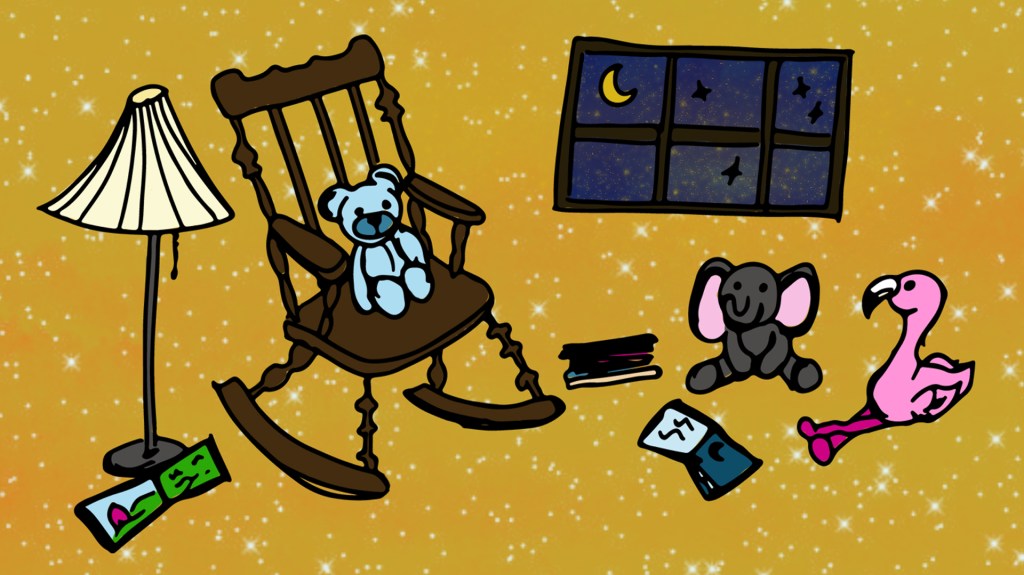
Then she waddles over to her basket of stuffed animals to get them in place for reading time, taking each one out and handing them to whichever one of us is sitting in the rocking chair, where we are now surrounded by at least three stuffed bears, two elephants, a llama, and a flamingo. Only when everyone is in place does she choose two or three books for us to read, specifying which one is for Mama and which is for Dada, before (sometimes) sitting and (less often) listening attentively as we read about mice and bears and little girls named Madeline getting appendectomies. When the books are finished, she invariably tries to ask us to read more, which she would do until midnight if we let her. 

When reading time is over, we tell her to put her animals away—most go back in the basket, but she sleeps with one of the elephants, so he goes over the crib railing—and we once asked if she was going to put her babies in bed, too, but she shook her head no, and now she does that every night whether we ask or not. So she holds on to them tight.

Finally, we lay out her sleep sack on the floor and say, “OK, it’s time for sleep sack!” And our daughter, who used to cry as soon as we carried her up the stairs to her room for bedtime, lays down on the floor on her own accord because she wants to go to bed.


Bedtime is genuinely enjoyable now, a pleasant conclusion to Mayla’s day and the beginning of our precious hours of relaxation before we go to bed ourselves. 

Once Mayla is in her sleep sack, Carly rocks her in the chair as we say our prayers and she rubs her eyes, yawns, and leans over to both of us for kisses (and often holds up her babies so we kiss them, too). Once we say “Amen,” I tell her she is beautiful and I love her to the moon and back, and before I close the door on the way out, I look back into her deep blue-green eyes, sleepy and serious. I relish the fact that the last thing my daughter sees before the lights dim is me blowing her kisses. 

Carly comes out of the room a few minutes later, and together sometimes we watch, from the baby monitor, Mayla hug her elephants and dolls and shift her body dramatically to get comfortable, and we marvel at how far she has come, how far we have come, how our daughter is growing up, and that fills us with a strange mixture of pride and nostalgia, nostalgia for those long loud nights and cold barbecue, when she needed us to hold her, and pride that she made it, we made it, our little family is making it, and we both just stand there with silent smiles.


Join our mailing list!

Subscribe to the Essays of Dad newsletter, a weekly email with parenting stories, background on essays, book recommendations, and more.
Processing…
Success! You're on the list.

Lessons from My Toddler

Ten things I’ve learned, or relearned, from my 18-month-old daughter

Illustration by Samantha Harrington

We, as parents, are supposed to teach our kids about the world: what’s good and bad and everything in between. We’re supposed to provide them a structure and framework by which they can begin to understand its complexities and ask questions when they don’t. We’re supposed to help them shape and sharpen their perspective and challenge it when necessary. We’re supposed to be their guides.

But through 18 months of being a dad to Mayla, our strong, hilarious, stubborn little girl, I’ve learned that the opposite is true, too: Our kids can teach us. I’ve learned—or perhaps relearned—things from Mayla that are as or more valuable than anything I’ve taught her. 

So here’s to those timeless lessons of toddlerhood. May we all remember them when life gets crazy.

  1. Take your work seriously.

Recently Mayla has become a chore connoisseur. If you ask her to open the door to let the dogs in, she immediately stops what she’s doing and marches over to it, stretching her arm and standing on her tippy toes to pull the handle. If you hand her a piece of trash and ask her to throw it away, she opens her hand and takes it to the trash can in the kitchen. If you open the dishwasher, she’s suddenly at your side, taking spoons out of the silverware hatch and handing them to you to put in the drawer (which she’d do herself if she were tall enough). If you say it’s time to feed the dogs, she scoops up the dog bowl and heads over to the bin of food in the pantry, waiting expectantly for someone to scoop a cup in. Then she carries over the now-filled bowl to the dogs’ designated eating spots, invariably dropping some (or a lot) of food along the way. When this happens, she immediately sits down and silently picks up every piece of dropped food, one by one, and places it into the dog bowl. It is attention to detail at its finest. 

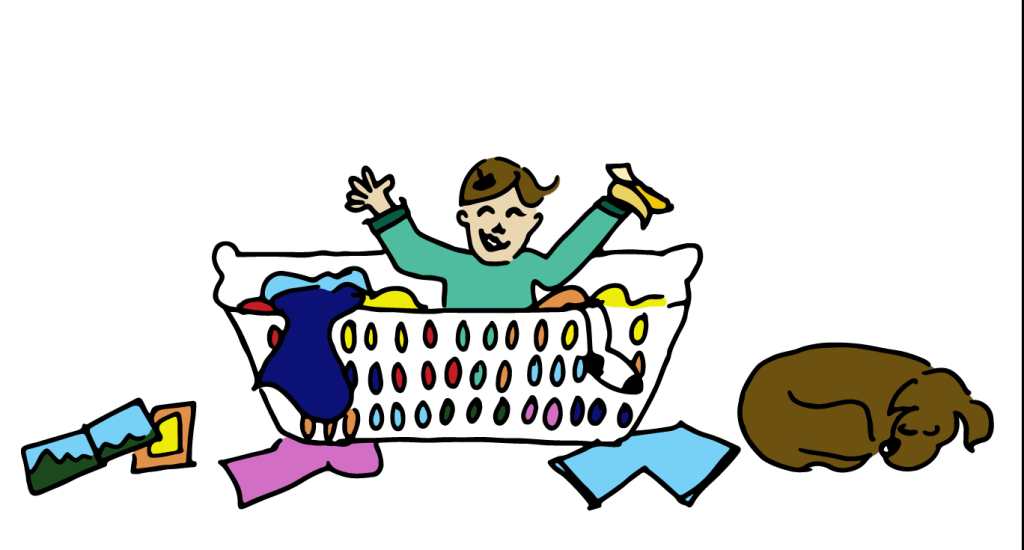
By far my favorite, though, is laundry. First, she loves to help put the dirty clothes into the machine, taking care not to miss even the smallest sock, helps scoop and pour the detergent, and presses the power button to begin the cycle. Then she goes about her day—until she hears the washer chime to signal the cycle is complete. She immediately drops whatever she’s doing, points over to the laundry room, and exclaims, “Uuahh!” as a giant smile forms on her face. This is our signal that she wants to move the clothes to the dryer, which we then do together. Finally, once all of the clothes are clean and dry (another chime that elicits a joyful scream), she helps us sort and organize all of them as we put them away in our bedroom.

My favorite part about all of this is the look on Mayla’s face when we ask her to do one of these tasks: She looks us directly in the eye, unsmiling, as if to say, Thank you for trusting me. I won’t let you down. To us, they’re relatively menial, quotidian chores; to her, they’re the most important thing she’ll ever do, and she treats them as such. I love that.       

  1. Play. Every day.

Work, as Mayla has established, is important. But so too is play.

Most of Mayla’s non-eating waking hours are spent playing: at the park, on the swing Papa built her in our backyard, in the playroom upstairs. She loves to play with blocks and cars and ramps and balls and bubbles. She loves to play hide-and-seek and chase and (an extremely basic form of) soccer. She loves to play with her Mama and Dada and grandmas and grandpas and aunts and uncles, with anyone who will pick up some blocks and help her make a tower. She loves to play.

Life, as we all know, is busy, and fulfilling your responsibilities as a parent or spouse or employee is of course paramount. But perhaps we should not forget to make time for, every day, something that brings us that simple, pure joy we found every day as kids.

  1. Food is life. Treat it as such.

Since we had such a challenging time feeding Mayla as an infant, we were worried that we might also have trouble when she graduated to solids. We did not.

Mayla loves to eat. Breakfast, second breakfast, lunch, post-nap afternoon snack, pre-dinner stroller snack—these are, probably, her favorite times of the day. It starts in the morning, soon after she wakes up, when she’s strapped into her high chair, wrapped with her bib, and gets to work. She eats eggs or waffles or oatmeal or yogurt (or sometimes several of these at once) and always, always fruit: blueberries and bananas, mostly, but often also strawberries and blackberries and oranges. It is her biggest and best meal of the day. 

The rest of her day is dictated by her eating schedule, and she will, by rapidly moving her bunched fingers toward her mouth, sign language for “eat,” let you know when it is time for her next meal. She’s the queen of snacks—Cheerios and cucumbers and cottage cheese—and loves to feed herself independently. If she likes the food you offer her, which is most of the time, she will sign for more and say, “Muuahh!” so adorably that you will have no choice but to agree to her demands. At some meals she will eat more than her mother. If she doesn’t recognize what’s on her plate, she lets us know, usually by pointing at the unidentified food and saying, “Uuahh?” Only when we have identified it all—“black beans,” “rice,” “avocado”—will she begin eating.

Mayla does not understand all of the hype about fad diets. She does not skip breakfast. She does not believe in intermittent fasting. She is not picky or demanding; if it’s in front of her, she’ll try it, and probably like it. She loves going to the farmers’ market and the local ice cream shop. When she’s there, she often treats herself to bites of her parents’ ice cream and doesn’t feel guilty about it. She does not think eating healthy is as difficult as adults sometimes make it seem. She abides by an eating philosophy radical in its simplicity: Eat good food and enjoy it.       

  1. Sometimes all you need is a nap.

Mayla does not pretend to be perfect. There are times when no amount of work, play, or food will fulfill her. During these times she simply needs what most of us crave every afternoon: a nap. A good, dark-room, fan-on, A/C-down, uninterrupted nap. When she wakes up she is refreshed and happy and ready to explore again.  

  1. Pet your dogs.
  2. Read, often.

If Mayla is not eating, sleeping, playing, or working, she’s likely reading a book. She has her favorites—Blue Hat, Green Hat; Brown Bear, Brown Bear, What Do You See?; Will You Be My Sunshine?—but is willing to try new ones, too. She loves the rhythm of the words and simple beauty of the illustrations. She loves pointing at pictures of things she recognizes, like “buhh”s (birds), “duahh”s (dogs), and “wawa” (water). She reads probably a dozen books a day, at all times of the day. Books, Mayla has reminded me, are sometimes the only entertainment we need. 

  1. Go outside when it’s sunny.
  2. Go outside when it’s raining.

Mayla is not brought down by the presence of rain; she is energized by it. As soon as she sees water falling from the sky, she excitedly points outside and exclaims, “Wawa!” She then relentlessly asks to go outside, and we eventually must let her, such is her desire to go play in the rain. When she gets her wish, she toddles around through the wet grass and splashes in puddles and raises her arms up to catch the miraculous wet drops falling from above. Her joy in these moments is pure. 

  1. Expressing your feelings and communicating are important.

Mayla has big feelings, and she does not shy away from sharing them. When she is happy, we know. When she is sad or angry, we know. When she is confused, we know. There is something refreshing in knowing exactly what she’s feeling at any given moment, because even if we can’t do something to immediately make her feel better, at least we understand and sometimes that’s all that matters. Carly, my wife, is especially adept at helping Mayla navigate her feelings. “I see that you’re sad,” she’ll tell our daughter. “But we are about to eat dinner, so I don’t want you to fill up on more Cheerios.” Sometimes simply the soothing sound of her mom’s voice will help her become calm; other times it won’t, but Mayla will know that her feeling was identified and understood.   

At some point as we grow up we are conditioned to hide weakness, to hide those big feelings, and sometimes that makes it difficult for others to understand. Mayla has reminded me that emotions are real and it’s OK to share them. We don’t have to be perfect. We just have to be honest.   

  1. The world is a vast, beautiful place.

My 18-month-old daughter thinks it’s an absolute joy to be alive. Sometimes she can’t believe that she gets to, every day, explore the world. She thinks it’s a privilege to watch birds fly and rabbits run and water rush through the creek. She thinks every rock on the ground and every airplane flying above is a joy, a miracle. She doesn’t take for granted that she gets to splash in puddles and read books and play with toys. She appreciates the simplicity of walking the dogs around the neighborhood and pointing up to the mountains along the way. She is endlessly curious and endlessly happy. 

I love her.  


Join our mailing list!

Subscribe to the Essays of Dad newsletter, a weekly email with parenting stories, background on essays, book recommendations, and more.

Processing…
Success! You're on the list.

The Teaching Dilemma

Thousands of teachers in North Carolina left their jobs last year. I was almost one of them—until the heart won its battle with the head.

Illustration by Samantha Harrington

*Editor’s note: All student names have been changed.

They cried. As the principal came on the intercom for his last announcement of the year, as they finished the final lines of their impromptu karaoke of “See You Again,” their arms linked with their classmates-turned-friends, as final minutes, then seconds, of their fifth-grade year trickled by, as the bell rang to release them for summer, a typically joyous occasion, half of my fifth-grade students were in tears. Brittany’s eyes were red and puffy. Eva’s tears were streaming down her face, under her blue surgical mask. Camila turned to her friend and said, “This is the first time I’m sad to leave school for the summer.”

The past school year, more than most, meant something to them, and to me. We created, my fifth graders and I, something special, memorable. Our class, at the risk of sounding cliché, felt like something close to a family. They bickered like siblings, knew one another’s strengths and flaws and idiosyncrasies, laughed and fought and cried together. They knew that Jeremiah liked at least two sleeves of grape jelly on his biscuit every morning. They enjoyed the fact that Erica owned over 50 birds, and listened and asked questions as she led a presentation about them every Friday during “Bird Talk with Erica.” They appreciated Ada’s love of Star Wars, and Evan’s obsession with Pokémon. They, whether or not they realized it, filled a classroom with love. 

As I watched them say goodbyes to friends new and old on that final day of school, I fought back tears of my own. I thought about the journey that led me to that specific moment, one that took me from coast to coast and dropped me in the mountains of North Carolina. I thought about how much the young people in front of me had grown since August. I thought about how becoming a teacher had changed my life. 

I thought about a lot during those final minutes of our school year, but hanging over every thought, like a cloud promising rain, was a brutally simple question: Was this my last day of school, too?


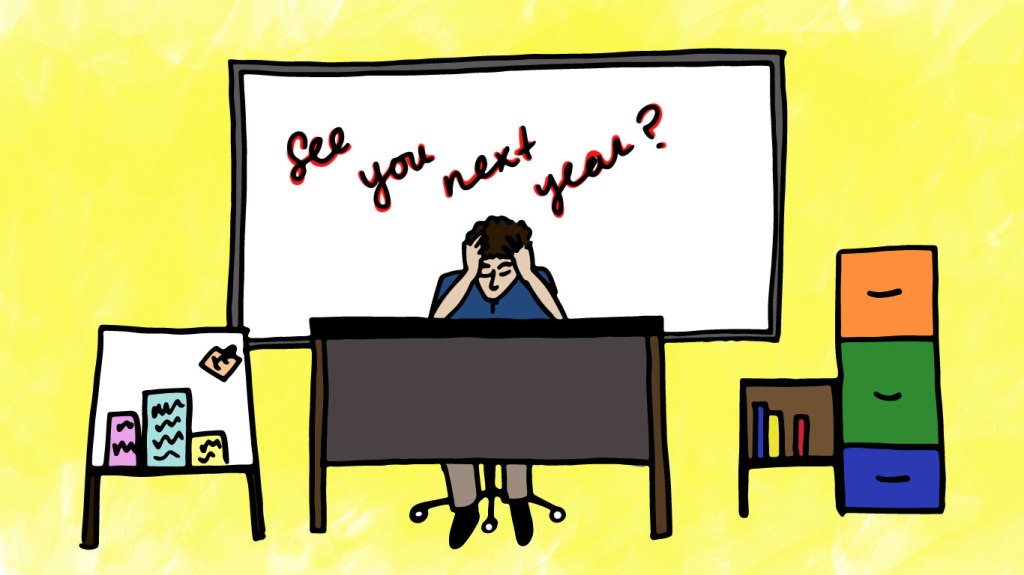
Last school year, of the five I’ve taught, was the most challenging. There were days I left the building defeated, or worse, disillusioned. Sometimes I’d spot a teacher friend in the hallway, and we’d simply share a knowing look and sigh. Teaching during a pandemic, devoting our not limitless energy and time to countless things unrelated to academics, worrying if we’ll make enough money to support (or start) a family—all of of the problems that have for years plagued public-school teachers, especially in North Carolina—they all began to, finally and inevitably, bear consequences. A teacher around my age found a new job and started it after winter break. Others took weeks off to recalibrate. Several teachers I know joined the almost 8,000 (!!) in the state who planned to leave the profession altogether.

For most of the year, I thought I’d be one of them. The realities of working full-time for not enough pay and being a dad became immediately and strikingly clear: When I got home from school, I’d usually tutor or complete my work as a teaching assistant for a college course to supplement our income. All I could think about during those hours was that I was missing spending time with Mayla, our now 17-month-old daughter, that I was missing her grow up. 

And that was at home. At school, chaos reigned. For the first half of the year, I usually spent the first 30 minutes of every day trying to figure out who was allowed to be there: Was that scratchy throat and runny nose dripping into their mask COVID or just allergies? Wait, was she technically exposed since they were outside but weren’t wearing masks? Does that kid need to show me a negative test so he can learn about fractions today? How many days was he in quarantine? I had to send more than one kid home, pulling them out in the hallway to tell them that according to the ever-changing policies they were not supposed to be at school. They handled the news, as ever, like champions: This was their new world.

When a student in my class tested positive, an administrator would walk down to my room, carrying a pool noodle (they’re exactly six feet, apparently) to determine who else was potentially exposed and therefore had to go home and quarantine for 14 (and later, 10, and later, seven, and later, five) days. I didn’t keep track, but I’d estimate that in my class alone the total number of days missed by students was over 100. They fell behind, of course, because if virtual learning taught us anything, it’s that it doesn’t teach students anything.

(None of this is to complain about pandemic policies or downplay the severity of a new and scary and often deadly virus; it is simply to say that how to be an effective micro-scale public health coordinator was not something they taught us in grad school [not that North Carolina values grad school, because they don’t pay a master’s degree supplement].)

COVID, of course, also exacerbated other issues that had already plagued the public-school system: behavior problems, achievement gaps, transportation. Our school, like so many others across our county and country, had a severe shortage of bus drivers, which meant that the ones we did have ran two, sometimes three, loads of students to and from school, which meant that teachers and other staff members were arriving hours early and staying hours late to supervise the early arrivers and late departers (who were often the same kids). During one particularly rough stretch, a group of students who lived in the same apartment complex had to leave school 20 minutes before the bell rang, missing out on instruction and time with teachers and friends, because it was the only way we could get them home before 6 p.m. If one of the drivers, God bless them, got sick or had to miss school—COVID or otherwise—the entire system came crumbling down. They couldn’t drive (and if you think hiring a bus driver is difficult, try to find a substitute), which meant many of their students couldn’t get to or from school because their parents worked early or late and they were relying on the bus. I remember missing a couple of my students one day because their bus wasn’t running and thinking that being unable to transport a child to and from school has to be one of the biggest failures of the public-school system ever.

Teachers got sick and had to miss school too, of course, and if that happened finding a substitute to replace him for a day was often close to impossible. When a class didn’t have a sub, usually a support staff member (media specialist, intervention teacher) would step in to cover it, which of course affected their own schedule and their students’ learning. Worse still, if there were several teachers out without substitutes, there wasn’t enough support staff at the school to cover their classes, so the students would be split into other teachers’ classrooms: More than once I had students from other classes arrive at my classroom door asking where they should sit for the day. (During all of this, we were called to a meeting in which a higher up in the system told us our students’ test scores were troubling.)   

Not that there were easy solutions: Teachers and administrators and staff at our school worked long days and often long nights simply to keep the school running; this wasn’t an issue of not caring or working hard enough. No, this was an issue of finding answers to often unanswerable questions. This was, as had become the trite saying, unprecedented. 

We were exhausted and sometimes broken. As every restaurant and grocery store around town started posting “We’re Hiring” on their road signs, we began to do the uncomplicated math: at almost $20 an hour for some of those jobs, accounting for working summers, we could make nearly the same salary we did teaching. One day after school my friend from down the hall came to me and said, “Today was one of those days that made me want to go pack boxes at Amazon.” At that moment I couldn’t come up with an argument against it. (And that’s not to take anything away from people who work those jobs, which are not trivial, or to say that they don’t deserve the salary they earn; it’s to say that teachers are underpaid relative to their training.)

It all began to feel unsustainable. For the first time in my career, I began to feel what everyone warned me about when I became a teacher: burned out.

So I began looking for a way out.


On the second-to-last day of school, less than 24 hours before my students cried during their final moments of fifth grade, I had a third-round interview for a writing job at a science education technology company. If I progressed, I’d have a final interview before the company decided whether to offer me the position. 

The application and subsequent interview process were intense—multiple essay questions, an initial interview with a manager, a writing challenge that took close to 10 hours of planning and research, an interview in which two senior team members critiqued and peppered me with questions about that writing challenge, an interview with other team members that required me to come up with several ideas for a potential science video—but I was relatively prepared, because six months earlier I had gone through the nearly the exact same thing for a similar job with a similar company. 

I was prepared to leave teaching halfway through the year. 

The jobs, which were fully remote, came with tantalizing benefits—401K matching! Weeks of (or unlimited) PTO! Free health and dental! Three months of paid paternity leave!—and a salary that doubled what I earned teaching. The complete package was more than six figures, easy. 

The contrast with teaching was striking. When Mayla was born toward the end of the previous school year, I took three weeks—15 days—and had to use sick leave for all of them. My wife, Carly, who also works in the public-school system, took 12 weeks and was paid for exactly zero of them. 

It baffled me: I could earn double my salary with benefits dwarfed those provided by teaching without gaining any extra training, education, or experience. I was still the same exact person! There was a job out there—multiple jobs—that valued my skill set (which, to be fair, is not that impressive) at least 100 percent more than the public education system did. I didn’t realize that this market existed for me. I thought a career change would involve, like it does for most other jobs, going back to school and earning another degree. 

I was taken: I imagined spending mornings writing and researching in our home office before heading downstairs to eat lunch with Mayla, and then maybe taking the dogs for a walk during a mid-afternoon break. I imagined taking a day off without feeling guilty. I imagined, overall, feeling less stressed. One of my greatest sources of worry as a dad was (and is) earning enough to support Mayla and our family, and this would have all but eliminated it. All of this, naturally, only increased my resentment for the current education landscape. These jobs wouldn’t be perfect, of course, I knew that, but it was difficult to think that getting either of them wouldn’t be a positive career and family move. 

But there lingered, during every hour spent applying to jobs and preparing for interviews, during runs spent pondering my future and the drives home after, a question I tried hard to ignore: Was I selling out?


Turns out I never had to answer it, because I didn’t get either job. After each final interview, I was emailed a stock rejection from the company’s HR rep. But the fact that at least some part of me questioned my willingness to leave teaching for a higher-paying, less stressful job surprised me. And the reason, as always, was what the entire crumbling, confusing, contradictory education system is built upon, and will be forever: the kids. 

Because every time I thought about my new life working remotely, I also thought about Patrick, who went from never turning in assignments to becoming one of the strongest math students in the class and crushing the end-of-year test. Every time I imagined a day without the unnecessary bureaucracy of education, I also thought about Joy, who showed up in tears on the first day of school and by the end of the year was confidently running my classroom. Every time I wondered what life would be like working in the real world, I also thought about Abby, who organized the entire class writing inspirational notes before I left to run the Boston Marathon, leaving me with no words and red eyes. I knew, no matter the companies’ claims of Improving the education of every child! and Implementing innovative, thoughtful solutions to personalize learning!, that they weren’t the same as being in the classroom, never would be. They couldn’t and wouldn’t match the feeling of flipping the lights on every morning and preparing for the rush of questions and stories and life that came from teaching a group of 10-year-olds. They would never come close to the love you felt as you gazed, from the front of your classroom, at those wide-eyed young people you were responsible for. They couldn’t replicate the pride you felt when one of them told you about finishing Harry Potter or the laughter that echoed around the classroom when one of them tried to teach you ballet. There would be no more inside jokes and personalized handshakes and sticky notes on my desk with fun facts. There would be no more Patricks or Joys or Abbys. They would be out there somewhere, sure, but I wouldn’t get to know them. And that ate at me. 

Because that’s all it’s ever been about, right? I realized early in my career, with startling clarity, that our students, those 20-plus (sometimes 30-plus!) vessels of humanity seeking our guidance, our wisdom, our presence—they are the reason teachers endure what they endure. They are the reason we bear the early mornings and late afternoons spent in the quiet aloneness of our classrooms, the after-school duties and meetings during planning, the ever-changing guidelines and protocols, the endless parade of important-sounding acronyms—in short, the challenges that public-school teachers deal with every time we walk in our classrooms. Our students need us. They need our knowledge, our discipline, our strength. They need us to listen to their weird stories and questions, to assuage their worries and fears, to inspire and lead and tell them it’s going to be OK. We are there, first and always, for them. 

I try to remember that simple truth every day: It’s about the kids. That’s all it’s ever been about. 


Therein lies the teaching dilemma: the conflict between rationality and emotion, the endless war between your brain and your heart. Or, as Gary Smith, one of my favorite writers, put it: “An old nettle digs at most every human heart: the urge to give oneself to the world rather than only to a few close people.”  If teachers were all Adam Smith-created (different Smith) rational beings, governed by pure self-interest, the entire system would crumble in days. Because teaching, at its core, is irrational, at least in the economic sense: Most teachers’ skills and experiences would earn them more money, sometimes far more, and perhaps a higher standard of living in another field. There is nothing tying them to their jobs other than a deep, abiding commitment to the young people in front of them (and summers off).

It’s cruel, really: It’s difficult to leave because you know you’ll lose that strong sense of purpose but difficult to stay because of everything else. The question, then, is which part of you do you choose: the pragmatist or the dreamer? That’s the question every teacher, those that left the classroom and those that are starting another year of teaching this week or month or year, wrestled with at some point before they made their decision. There is no right or easy answer.

I made my choice: Yesterday I started my sixth year of teaching. The question for me, then, and all fathers, is how do I teach Mayla which voice to listen to, which itch to scratch? How do I teach her how to balance reason with emotion, logic with passion? Can she—can anyone—have both? For a good portion of last year I thought that I couldn’t be both a good teacher and a good father because I wasn’t around enough, but what I’ve learned is that maybe being a good teacher is part of being a good father, that maybe one of the most important lessons you can teach your child is that the world is complicated and sometimes you have to listen to the nettle that digs at your heart.

All of that’s for the future, though. For now, I’ll simply smile when, on the final pages of her favorite book Brown Bear, Brown Bear, What Do You See?, she points to the teacher and proudly says, “Dada!” 

“Yes,” Carly tells her. “Dada is a teacher.”


Join our mailing list!

Subscribe to the Essays of Dad newsletter, a weekly email with parenting stories, background on essays, book recommendations, and more.
Processing…
Success! You're on the list.

What I Talk About When I Talk About Running With My Daughter

Illustration by Samantha Harrington

We blazed, my daughter and I, down the mountain, the trees around us a blur and our hair jetted back like we were on a rollercoaster. I looked down at the watch on my left wrist; it indicated that we were running sub-6-minute-mile pace. Perhaps concerned about the speed, Mayla, my one-and-a-half-year-old daughter, looked back at me through the crack in the stroller awning, as if to ask, You got me, dad? We closed the 6-mile run on one of my favorite trails in 5 minutes and 57 seconds; it was our fastest mile together, and we’ve run many.

We’ve covered miles in our neighborhood, on trails, on the beach, on the dirt road I used to run from my parents’ house as a high schooler in Florida. We’ve run in the heat and cold and rain. We’ve run to blow off steam after a long day and to feel the wind rush past our faces and the oxygen snake through our veins. We’ve run because it is sometimes the best way to give thanks for another day of sun and cloudless skies. We’ve run because sometimes the best thing to do when life gets overwhelming or complicated is to throw on the trainers (HOKAs for me, white low-top Converse for her) and sweat. We’ve run to feel free, alive. We’ve run every mile together. 

I had been looking forward to running with Mayla before she was born, and was slightly disappointed when I found out that she wasn’t old enough to go for a run until she was six months old (count this as one of the many logical things I didn’t know entering fatherhood). But when Carly, my wife, bought me a used running stroller as an early Christmas gift, it was, in the most literal sense of the phrase, as if Christmas had come early.

I took her out in it for her first run later that week; she seemed to love it. Since then, our runs have become something exclusively ours: Dada and Mayla, pounding pavement or crushed gravel, with the squirrels and rabbits and birds often our only companions. They are some of my favorite times as a dad.   

I always wonder what she thinks when we’re running. Often she smiles and points at dogs or other animals passing by, identifying them by name if she knows. Other times she’ll, after minutes of silence, sit up suddenly and yell “Dada!” as if she just remembered who was making her move. “Hi, Mayla!” I’ll respond, and she’ll look back at me, wave her hand dramatically, and say, “Haaii!” with an irrepressible smile. Recently, when she’s bored I guess, she’s started rotating her fists in front of her face, which means she wants to hear “Wheels on the Bus.” And that is why, if you’re around the park near our house at the right time, you’ll hear a dad singing “The people on the bus go up and down/up and down…” through clipped breaths as his daughter throws her hands up, dancing to the song in the stroller that he’s pushing in front of him.

Most of the time, though, she sits there essentially expressionless, taking in the sights and sounds and life around her. It’s in those moments, when I look down at my daughter, the person who changed my life for the better, forever, that we experience something pure, a type of wordless communication of love, the embodiment of stillness and contentment: Just a dad and his daughter covering ground as we were designed to do. I like to think she loves these runs as much as I do. (As if to prove that point, she fell asleep on one run: As we climbed up a steep hill on our first trail run, as the stroller bumped and swung over the uneven ground and Arcade Fire blasted from my phone’s speaker, as I sweat and huffed vigorously, Mayla closed her eyes, put to sleep by the rhythms of running. She awoke shortly after to eat a snack once we reached the top of the hill.)

I don’t know if Mayla will become a runner when she’s older; I won’t attempt to sway her one way or another. I mostly want her to appreciate its simplicity and groundedness with the natural world, to understand that there’s value in making your heart work hard and letting your mind escape the everyday, to see that the world is vast and gain important perspective. Maybe she’ll find that through running, or maybe it will be something else.

Right now, though, we’re going to keep running. A few weeks ago we went out for a 2-miler, and about a mile-and-a-half in it began to rain, gradually picking up in intensity. We were still a good half-mile from our house, so I tried to cover her the best I could with the awning as we turned home. A few seconds later, we hit a significant bump, and my phone flew from the top of the stroller into her lap. I walked around to the front of the stroller to retrieve it. 

“You ready?” I asked, extending my hand. She looked me in the eye and returned my fist bump.

So the father and daughter ran home in a growing rain. 


Join our mailing list!

Subscribe to the Essays of Dad newsletter, a weekly email with parenting stories, background on essays, book recommendations, and more.
Processing…
Success! You're on the list.

An Ode to Summer

Here’s to those days with endless light, to those days we spent together…

Illustration by Samantha Harrington

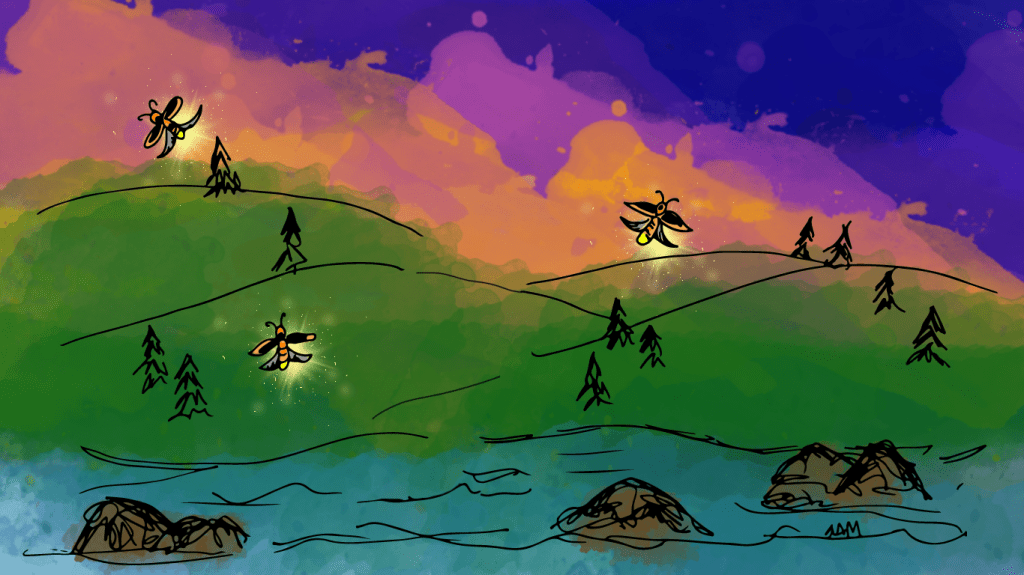
Long live those long, unhurried days of summer, when the sun sank behind the mountains as we finished up a late dinner and let Mayla search for fireflies in the backyard before a late bedtime. Long live its sounds and smells, the hiss of the grill and the new plastic of inflatable pools. Long live the heat and the storms and the cool gray nights. Long live summer.   

Summer, for teachers, is special, perhaps even sacred, but this one carried more meaning for me: It was the first real one I spent with Mayla, our vibrant, curious, exhausting 17-month-old daughter. Last year, both because of her age and her dependence on Carly for feeding, father-daughter time was relatively and understandably limited. And this summer, with Carly, my wife, working part-time, we tried to make up for it.

So, with the summer officially ending in less than a week (teachers in our county go back to work on Monday), here is what I’ll remember from those two precious months with my daughter.

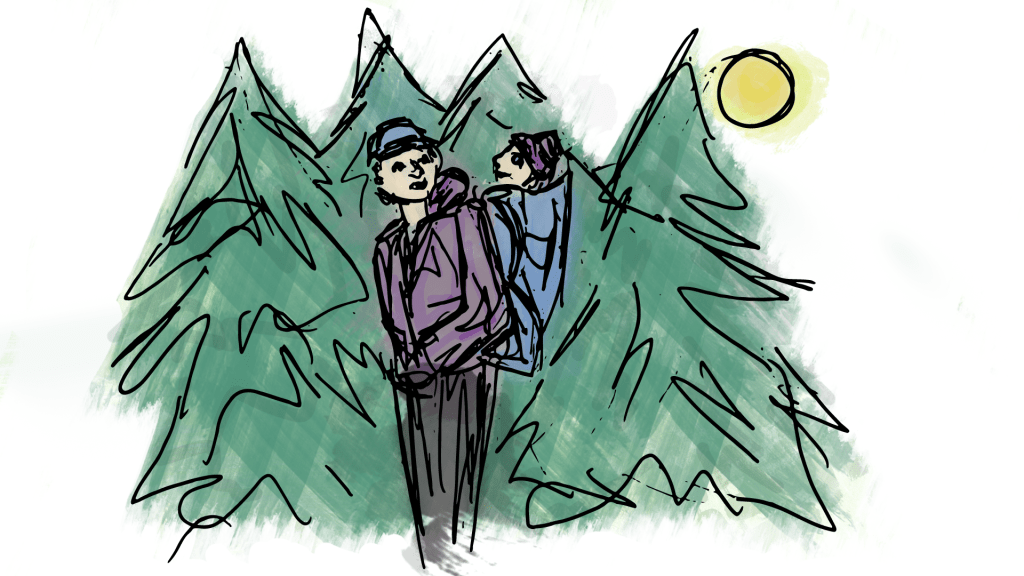
I’ll remember taking her on hikes, strapping her to my chest as she pointed to the trees and leaves all around us and keeping her content with a ready supply of her favorite snacks. I’ll remember the trips to the library, where every book was her favorite book and she waddled around the kids section as if it were her home. I’ll remember our family trip to the science museum, where she played with rocks and trains and colored pictures of weasels as her father read a Carl Sagan quote about the vastness of the universe and the smallness of Earth on the wall. I’ll remember discovering that her name means “one who loves water” and thinking how fitting that was as we watched her play in endless pools and creeks and puddles and hoses. I’ll remember her learning how to say water, her demands for “wawa”—either to drink or play in—echoing around our house daily.

I’ll remember pushing her in the stroller for runs around our neighborhood, in the rain, on my favorite trail in the woods. I’ll remember her falling asleep once we reached the top of the climb, the rhythm of running and sounds of summer making her eyes heavy. I’ll remember watching her walk around a fairy garden with my mom, swing on a swing set built by my dad, listen to my sister read about an insatiable caterpillar. I’ll remember her demanding to be read Brown Bear, Brown Bear, What Do You See? and Red Hat, Green Hat and Will You Be My Sunshine? at least 50 times each. I’ll remember the joy and wonder on her face when she discovered that like the teacher in Brown Bear, Brown Bear, Carly also wore glasses, her little neurons forever firing and connecting as she pointed back and forth from the illustration to Carly’s face. I’ll remember when she learned how to ask us to play “Wheels on the Bus” by attempting to rotate her fists over each other but looking more like she was speed punching a tiny punching bag in front of her face. I’ll remember her insistence on helping us with chores around the house: dumping laundry into the machine, feeding the dogs (and picking up every dropped piece of food one-by-one), handing us clean spoons to put away from the dishwasher.

I’ll remember teaching her how to kick a soccer ball and give a fist bump, that “luna” is Spanish for moon, and that the best flavor of ice cream in the summer is strawberry. I’ll remember her getting a zucchini that was almost as tall as her from our friend’s garden, and watching her eat a tomato, like an apple, straight off the vine from her aunt’s. I’ll remember the smells of grilled salmon, crisp watermelon, fresh basil sitting on the kitchen windowsill—and our long, slow lunches on Sundays. 

I’ll remember traveling down to south Florida to see her aunt, and up to rural New York to see her extended family. I’ll remember changing her diaper in the plane bathroom on the flight there, bouncing with the turbulence as she smiled up at me from the too-small changing pad. I’ll remember picking blueberries with her in the garden of the great-grandma she never met but loved her deeply, laughing as she ate four of every five she picked, and watching her swing from the same tree that Carly used to in the summers. Finally, I’ll remember watching the river with her later that day, sitting on a bench outside of our hotel as a soft breeze made the flowers around us dance as she looked out at the water and rested her hand on my leg, reminding me that, sometimes, the best thing you can do as a dad is simply be there. 

Mostly, I’ll remember this as the summer I got to know my daughter better: her moods, her intricacies, her thoughts and desires. I knew her, of course, and fatherhood doesn’t stop once the school year begins, but this summer was something beyond the normal break from work, something that felt important.

I will miss it.


Join our mailing list!

Subscribe to the Essays of Dad newsletter, a weekly email with parenting stories, background on essays, book recommendations, and more.
Processing…
Success! You're on the list.

My Complicated Nostalgia for Baby Bottles

Bottles were at the center of our long, challenging journey to feed our daughter. Why do I miss them?

Illustration by Samantha Harrington

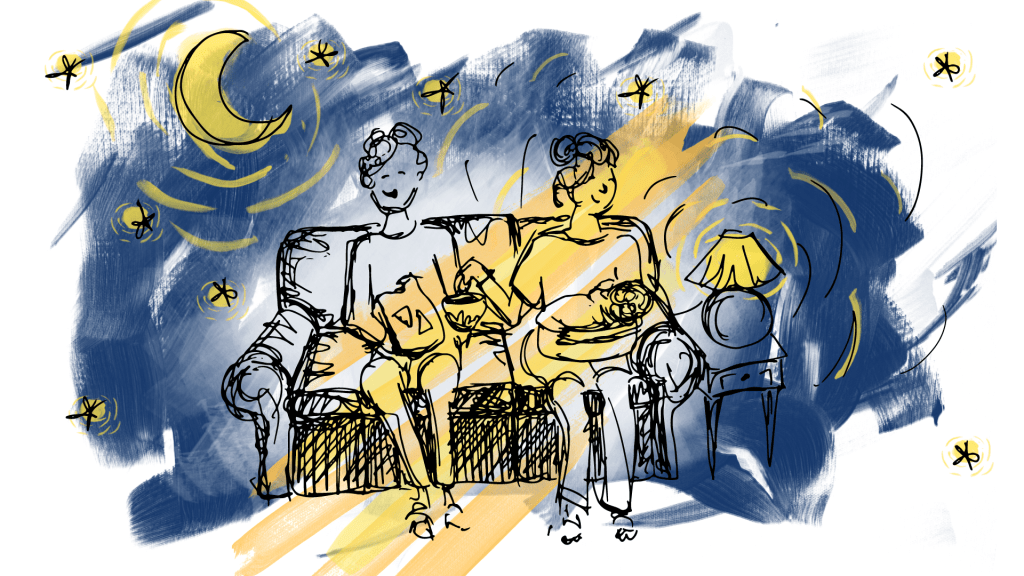
Every night for months, just before we put our daughter, Mayla, to bed, Carly fed her from a bottle. Reclining in the crook of Carly’s elbow, Mayla’s wide blue eyes would stare up into her mother’s with a look of determination and contentment as she drained the milk or formula from within. The whole process would take no more than three minutes. They were among the best of my day.

Watching Mayla drink from her bottle produced a cocktail of complicated emotions. For months, the most prominent one was relief: Mayla, for the first five months of her life, simply couldn’t drink from one, her lips and tongue and brain unable to harmonize into the sucking pattern that came naturally for most other babies. She was 100 percent dependent on Carly for food and, therefore, survival. So when she finally started taking a bottle, in what seemed like a miracle, her every sip reminded me of the long, challenging journey there.  

Near the end of her bottle feeding days, though, I began to feel something deeper. Silently sitting and watching the most powerful woman I know feed the most important thing to ever happen to us, the white noise from the sound machine slowly growing in intensity and the lamp gradually dimming, I felt peace, a firm sense that, after years of trying to figure out post-college life, I was exactly where I was supposed to be: living those moments, as Barack Obama wrote in A Promised Land, “when the world slows down, your strivings get pushed to the back of your mind, and all that matters if that you are present, fully, to witness the miracle of your child growing up.”

And soon, I knew, those moments would be gone, replaced by new ones, because, yes, Mayla was growing up. She was going to graduate from the bottle any day, to straw cups, and in my mind that marked her progression to becoming a toddler. Her bottle, for so long a source of frustration, had become one of the final things tethering her to babyhood. And that, more than anything else so far in our journey, made clear one of the fundamental truths of parenting: Youth, as one of my favorite writers put it, doesn’t bother to say goodbye.


Around her sixth week of life, we discovered that Mayla had a tongue and lip tie. In biological terms, it meant that the frenulum under her tongue and upper lip were both too tight and too restricted to allow proper tongue and lip movement; these movements are necessary for sucking, swallowing, and, later, speech. In applicable terms, it meant that she had lots of trouble eating. 

Not only was she inefficient—breastfeeding sessions, which typically last 10 to 20 minutes, would often take Mayla 45—she was not getting enough milk: At her three-month check-up at the pediatrician, she had dropped from the mid-20th percentile to the 6th for weight. Usually when a baby has trouble breastfeeding you can supplement with a bottle; Mayla was not usually. Bottles hung limply from her lips, which didn’t know how to extract the milk. Her only way of eating was laboring for hours every day to get less than what she needed.  

Constantly being hungry and never being able to eat enough, of course, affected her mood and sleep, which affected her parents’ mood and sleep. She was, thankfully, developing properly in every other way, but as her parents it was hard to think you were doing a good job when your firstborn was going to bed hungry.

Mayla’s inability to eat well and take a bottle bore consequences daily. Carly could not leave her, ever, because Mayla, psychologically and often literally, was attached to her: Mom was the only way to get food. (I often told—and tell—Carly that she legitimately, for more than five months, kept another human alive, was her sole source of nutrition. At the time it perhaps seemed unremarkable; it was simply what she had to do, and she’d do it again without hesitation. But the quiet, consistent strength it required was something close to heroic.) We couldn’t go anywhere because Mayla would simply scream in the car, or at our destination, because she was hungry; or if we did make it somewhere, she’d have to eat for another 45 minutes. Our days mostly consisted of hanging out around the couch, waiting for Mayla to finish eating or begin again soon.     

We tried everything to get her to take a bottle, which would, we knew, significantly improve our life. The first step was to get the tongue and lip tie fixed, through a not-inexpensive procedure called a frenectomy, but that, surprisingly and unfortunately, did little to improve her feeding skills. The pediatric dentist who performed the frenectomy gave us exercises for her mouth and tongue designed to help her (re)learn how to suck, and we did them daily, religiously. Still, no improvement. 

We talked to our pediatrician. We talked to several lactation consultants. We talked to a pediatric nutrition team at the hospital. We tried no fewer than a dozen different bottles. We drove an hour to an orofacial myologist, who poked and prodded around her mouth. We drove 40 minutes to a craniofacial myologist, who gave her what seemed to be an extremely light massage. We took Mayla to a chiropractor (for real), who gave her what had to be the gentlest neck adjustment in history. Very little of this was covered by insurance—we spent a few thousand dollars trying to help our daughter learn how to take a bottle—and very little of it brought about improvements in her eating.

We were discouraged, and desperate. I remember thinking, What if she just never takes a bottle? I knew that some babies, of course, were exclusively breastfed, but that was not our plan. Carly needed a break; the current system was wholly unsustainable and typically unjust. I could leave the house to run, or go out of town for a friend’s bachelor party, or simply cook dinner or take a 10-minute shower. Carly couldn’t do any of those things, had to miss the final month of school and her best friend’s bachelorette party because she couldn’t be away from Mayla. 

Intensifying matters was the fact that Carly, an elementary school speech therapist, was due back at work at the end of the summer; if Mayla couldn’t take a bottle by then, she wouldn’t be able to return to work, and we would have had to find a way to make up that lost salary. I was already working two part-time jobs in addition to teaching, and I began looking into more. As the weeks passed in July, and then August, our anxiety grew. We had a deadline by which Mayla, lest there be even more significant changes in our lives, had to take a bottle. 

What was alarming, both then and now, was the complete lack of accessible guidance on how to proceed if your baby won’t take a bottle (and the time and money spent if you ever found it). We were—I was—lucky that Carly, who possesses a deep knowledge of infant feeding and orofacial anatomy, knew where to look and what to research. Even then, though, at times the advice we received from highly educated professionals was either conflicting or simply reduced to: Have you tried this bottle?

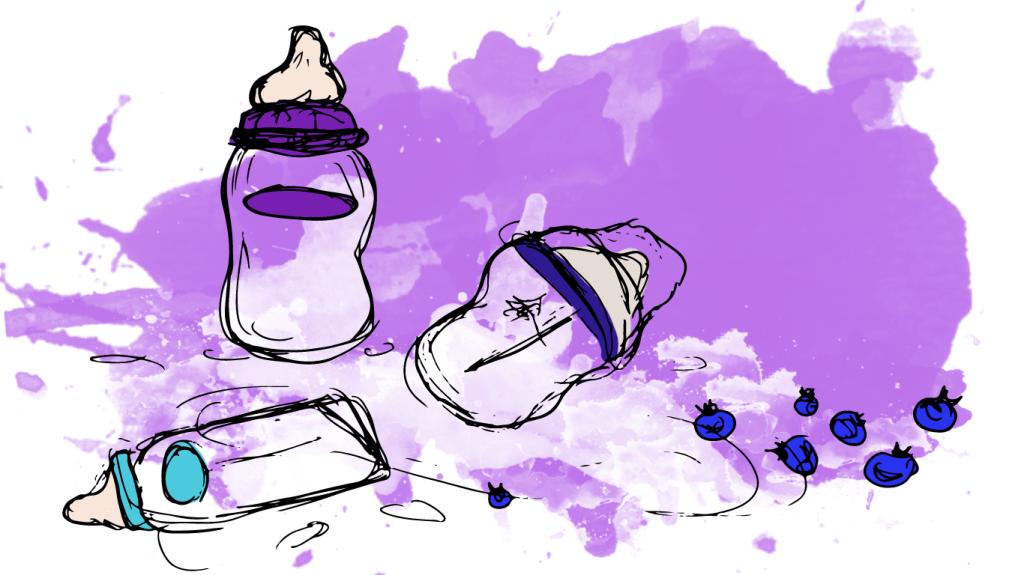
In the end, I have no idea what saved us. Perhaps the bottle Mayla eventually liked—a Lansinoh with a purple cap—was the difference-maker, or maybe something suddenly clicked between her brain, lips, and tongue that allowed her to finally develop the sucking reflex we had spent several months and thousands of dollars trying to achieve. All I knew was that it was one of the greatest feelings of my life.

“OMG,” Carly texted me on August 10 at 12:05 p.m. I was at work.  “SHE JUST TOOK A WHOLE OUNCE FROM THE BOTTLE.”

“I’m going to cry,” I wrote back.


The first time I bottle fed my daughter was later that day; she was five months old. Carly took a video of it, and as I watch it now I’m struck with how pure my joy is: I smiled for the entirety of the 35-second feeding session (from 45 minutes to 35 seconds…). I gave her encouragement and watched with pride as she guzzled the milk. “That’s amazing,” I concluded once the bottle was empty. And it was: I could finally feed our baby, and Carly, throughout the upcoming weeks and months, could finally become something close to a normal human again. 

The last time I bottle fed her was…I honestly don’t remember. It became such a quotidian experience that it stopped being memorable (despite my proclamations in the months prior that I would never take it for granted) and soon became obsolete. Mayla drinks milk and water from straw cups now, and eats solid food: blueberries and oatmeal and broccoli and salmon. She is a thriving toddler with no shortage of curiosity, energy, and emotion, the best part of my day every day. 

Every now and again, though, especially before she goes to bed, I’m hit with a pang of nostalgia about her bottle feeding days. She was so small, dependent: She just looked like a baby when she drank from a bottle. Now she can tell us, with sign language or the few words she knows, when and what she wants to eat, and walk over to her high chair to show us where she’d like to eat it. Now, instead of feeding her a bottle from the reclining chair before bed, we attempt to read her Goodnight Moon for the 800th time as she tries to squirm free to turn the lamp on and off unceasingly. Now, I relearn every day, she is not a baby anymore.

So there they lay, the bottles, there they lay in a neat pile in a clear tub that sits in our attic, relics of a past I didn’t think I would ever miss. 


Join our mailing list!

Subscribe to the Essays of Dad newsletter, a weekly email with parenting stories, background on essays, book recommendations, and more.
Processing…
Success! You're on the list.

Her Eyes

Illustration by Samantha Harrington

Let’s start with the surprise: her eyes are wide and blue, the color of the ocean. Mine and my wife’s are thin and dark brown, the color of coffee without cream. They say her eyes can change color up until she’s a year old, and maybe they will. Most of our close family members’ are dark like ours. But until then her eyes, big and blue, will be two unexpected pools of color in our world.   

Her eyes don’t open immediately when she wakes up. In fact, it seems like sometimes they’re the last part of her body to know she’s awake. She yawns and stretches and grunts and sometimes even cries all the while her eyes stay closed. Only when she opens them fully do we know that she is ready.

Her eyes are then alerted by her stomach that she’s hungry. Often this happens immediately, seconds after they open, and food has to be made available no matter what her mother is doing. If too much time passes, she will squeeze her eyes tight, like she’s looking for something inside her face, as her mouth opens to scream. 

As she eats, her eyes are focused on the task at hand, only taken occasionally by a passerby in the house (her dad) or the weight of sleep. They have no time, no patience, for distractions; eating time is for eating, and everything else will have to wait. Later, often as you are holding her, her eyes will suddenly widen and turn grave, the universal sign for I gotta take a poop. Sure enough, she will let it all out, making no effort to conceal the noise, her eyes serious the whole time. 

Once she has eaten, digested, and excreted, her eyes are light, full of life. If you say something she likes—“Are you having fun with Sophie Giraffe?” “Do you love your mama?”—they will squint in delight as her chin falls to her chest and her shoulders rise and her lips curl in a smile. It is a picture of cuteness, of pure glee. If you say something she doesn’t like—“Are you ready for a nap?” “Wanna take a bath?”—they will sink and stare as her lips twist into the cleanest and clearest of frowns. It is a picture of pure disdain.

You will then have to pick her up, which is the time her eyes love the most. From your arms, they search, constantly. They look at lights and other eyes and signs hanging on the wall and ceiling fans. (Oh how they love ceiling fans.) They often look curiously at her parents’ wedding photos behind the couch, scrutinizing them as if to say, Wait, I know those people… For the first couple months of life, they love contrasts, the black-and-white books of shapes you give to her during the ever-important Tummy Time, literally seeing the world in black and white. A month or two later, they will follow you, or your finger, or whatever you’re holding, as you move from one spot to another, an important developmental milestone, you learn, called tracking. 

And that’s only inside. Take her outside and her eyes will have, to use the scientific terminology, an absolute field day. (Only after, of course, she theatrically squints and turns her head away from the sun, like a teenage gamer walking outside for the first time in weeks.) Once they are adjusted to the brightness, or shielded by a bucket hat, they get to work. They take in the trees and the mountains and the squirrels and the birds and the rocks and the leaves and the giant empty blue space up above and the green green green all around. Sometimes they dance across her plane of vision, darting from one thing to the next without rest; other times, they stare, endlessly, at some inanimate object, like a chair or a blade of grass. On hikes through the forest, they look straight up, through the canopy of trees, and when you are overcome by curiosity you will do the same and wonder why you don’t do it more often, for the sight is magnificent: streams of blue and light popping through small pockets between the trees. You smile as you realize that your 3-month-old has taught you to look for the beauty in hidden places.

One day her eyes will fill with tears, and it will be sudden and sad. Until then her cries were dry and therefore lacked a certain magnitude; the tears change all of that. They will hop, slowly, down her cheeks when she’s upset and you will think of the lyrics of a song called “The Girl”: When you cry a piece of my heart dies/knowing that I may have been the cause. Often, you will have been the cause: You will have had the audacity to try to get her to take a nap, or put her in the car seat. Her eyes will narrow and blink as you rock her in your arms and she releases full-throated screams, but they will refuse to close until biologically necessary. When they finally do shut, they will look so peaceful you will forget the battle you waged to get her to sleep. From the baby monitor or from the side of her crib, sometimes you will just watch her sleep, and your worries, for those precious minutes, will melt away.

With the exception of her hair, a chaos of dark brown perched wildly atop her head, her eyes, big and blue, are her most defining feature. They search and find and cry and sleep and track and close—and, you will learn, comfort.

One day you will be so worried about keeping her safe during a pandemic that you will be in the bedroom, fighting off tears. From Mom’s arms, her eyes will turn to yours and look at them curiously, as if to wonder, What’s wrong with Dad? They will stare at you for several seconds, paying attention to nothing else around them because they realize that right then you need the full extent of their love. As they continue to stare, you will think of the lyrics to another song, the one that inspired her name—And all I have to do to rise/is look into your eyes—and take her from Mom’s arms. Her eyes, big and blue, will stare up at yours. And they will, not for the last time, help you rise.


Join our mailing list!

Subscribe to the Essays of Dad newsletter, a weekly email with parenting stories, background on essays, book recommendations, and more.
Processing…
Success! You're on the list.

The First Month

Illustration by Samantha Harrington

Maybe, in a few years, we will forget all of this. Maybe, when life speeds up and obligations multiply and priorities shift, we, my wife and I, will forget the small things that made this first month of parenthood the greatest, and fastest, of our lives.

Maybe we will forget eating Jimmy John’s subs in bed at the birth center, fulfilling my wife’s nine-month vision for cold cuts after the restrictions of pregnancy eating had finally, gloriously, been lifted. Maybe we will forget the drive home a few hours later, in the dark of night, as I clutched the steering wheel harder than I ever had and Carly, the new mom, sat in the back seat with the newest member of our family, a sleeping seven-hour-old baby girl named Mayla, speaking to her softly. Maybe we will forget first carrying her blanket into the house so the dogs could familiarize themselves with her scent before she, an intruder, entered the space they’d devoted their lives to protecting. Maybe we will forget that first night, a haze of FaceTiming and unpacking and, finally, sleeping.

Maybe I will forget scooping her from her bassinet as she awoke in the middle of that first night, softly placing her on my chest as I read Lord of the Rings on Kindle. Maybe Carly will forget having to wake up every two to three hours, every night, indefinitely, to feed our growing daughter by lamplight. Maybe I will forget the fruitlessness I felt for not being able to feed her myself and occupying the far less important role of Mid-Feeding Diaper Changer to ensure she’s alert for the second half of her 3 a.m. snack. Maybe we will forget the sporadic, hopeful naps the following afternoons—sleeping, as everyone advises, when your newborn sleeps. Maybe we will forget frantically waking up at 2 a.m. to make sure that she was in the bassinet next to us, that we didn’t doze off with her in our arms in bed. Maybe we will forget, once that panic had passed, touching her sinking and rising chest to make sure she was breathing.

Maybe we will forget the countless appointments, checkups, and weigh-ins with different doctors and specialists, each of them offering a version of the most important truth: Both mom and baby are healthy and strong. Maybe we will forget putting Mayla on the porch to soak up some Vitamin D and reduce her moderately high levels of bilirubin. Maybe we will forget what the heck bilirubin is. Maybe we will forget the gratitude we felt for her first-time grandparents and aunts and uncles, who arrived from out of state to take care of the people taking care of the baby. Maybe we will forget the sheer joy they felt once they held their grandchild or niece for the first time, all of their worries melted away almost instantly.

Maybe we will forget the diapers soiled by yellow, seedy poop, a development that would have been concerning had the doctors not told you it was normal. Maybe we will forget our daughter’s propensity for peeing only when we had removed her diaper before putting on a new one, soiling the changing pad liner more times than we’d ever expected. Maybe we will forget the looks of grim determination or grave concern as she felt, or forced, a bowel movement. Maybe we will forget her first blowout, which somehow resulted in poop coming out the front of her diaper, staining, for good, the clean white shirt she’d been wearing.

Maybe we will forget staring at her, for minutes straight, watching her watch the world, her eyes a window into her days-old mind, trying to decipher what she’s thinking and learning and feeling. Maybe we will forget the furrowed brows and pursed lips and open mouths, or the sudden, instinctual punches and kicks. Maybe we will forget the grunts and moans and squeaks and yawns, the new, adorable soundtrack to our lives. Maybe we will forget her round cheeks and thick hair, her chunky legs and searching eyes. Maybe we will forget her sneezes, full-body contractions that seem to surprise her no matter how many times they come (six in a row one night). Maybe I will forget reading to her in the gray chair in the nursery, feeling her warm milky breath on my chest as she slept or stared out of the window, paying little attention to my reading of dozens of words that rhyme with llama.

Maybe we will forget the crying, and the challenges of breastfeeding, and the stress and short fuses caused by lack of sleep. Maybe we will forget failing to adhere to any type of schedule because newborns are fickle and need to eat when they need to eat. Maybe I will forget feeding Carly appetizers on the couch as she feeds Mayla, holding a bowl of salsa steady so she can carefully dip tortilla chips into it, a hilarious food chain. Maybe we will forget our realization that they weren’t lying when they said parenting was hard.

Maybe we will forget all of this. Maybe this first month will be nothing more than a fleeting, blurry memory, a series of half-remembered moments that we will embellish with time. Maybe we will look back on them and feel completely different than we do right now.

Or maybe not. Maybe there are some moments that you will remember forever.

Maybe, one night, your daughter will have trouble feeding and your wife will be understandably frustrated, her clothes wet with excess milk. Maybe, as she is upstairs showering and you are in charge of heating up burritos for dinner, your daughter will start crying. Maybe you will pick her up and put on music; as the lyrics came through the speaker, maybe you will look into her wide blue eyes. Maybe they will stare past yours, over your right shoulder, into the middle distance. Maybe it will seem like she is watching her entire future unfold, right there in the kitchen, and she lay in your arms, a curious, half-smiling expression painting her face. And, maybe, in that moment, it will just be the two of you, and nothing else will matter, and it will feel like time slows as your eyes become warm and wet and she continues to stare past you, and then she will look at you, and right then you will feel something you’d never experienced in your life, a surge of pure love, and you will know then that she is the most important thing to ever happen to you.

No, you will not forget that.


Join our mailing list!

Subscribe to the Essays of Dad newsletter, a weekly email with parenting stories, background on essays, book recommendations, and more.

Processing…
Success! You're on the list.

On the Power of Women

Illustration by Samantha Harrington

Somehow, they sold you short. For months, years if you’re around the right people often enough, they told you this would be “the greatest day of your life” and “there’s no other feeling like it in the world” and “cherish every second because it’s over like that.” They tried, with the vocabulary available to them, to describe something that was beyond words, beyond communication, beyond, even, comprehension.

They did not tell you, in the moment your daughter, Mayla Ruth, entered the world, as you watched the midwife unwrap the umbilical cord from her gray neck and she took her first gulp of oxygen, that your own chest would fill with a light you’d never felt before as around you time slowed and surroundings blurred. They did not tell you, as she was placed, softly and immediately, on your wife’s chest, that your head would, instinctively, fall there as well, the first moments of your new family captured not in a picture but solely in your memory, where they will live forever. They did not tell you, as your wife exclaimed, “I did it!” through relieved, joyous, clipped breaths, that you would be crying more than your newborn daughter, the tears falling under your cloth mask. They did not tell you, when they described her, that words like “beautiful” and “gorgeous” and “precious” were somehow not powerful enough; angelic, maybe even divine, would come closer. They did not, could not, tell you any of this, and perhaps that was for the best, because this was, after all, something, like watching the Northern Lights or viewing the Earth from space, that could only be felt.

The intensity of those feelings, of that love, for your daughter were matched only by the same ones for your wife, and the gratitude you felt for the people who delivered your baby: the nurses and midwives at the women-run birth center who guided you through the most intense, and greatest, day of your lives. All of them reminded you, on International Women’s Day no less, of the irrepressible, imperishable power of women.


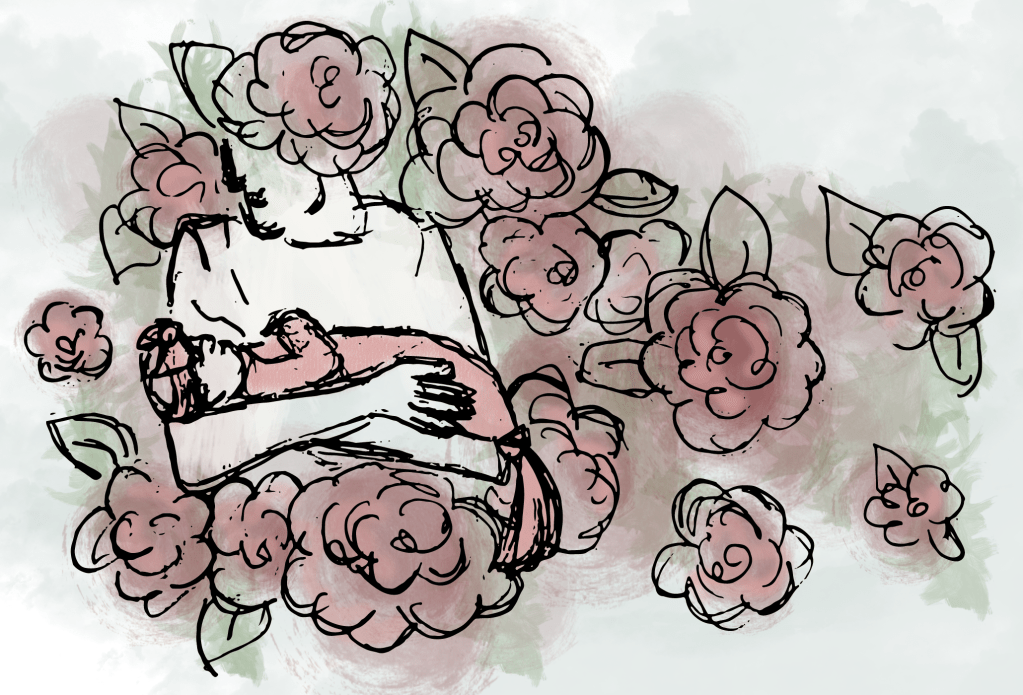
You learn a truth soon after you find out you are going to be a father: A pregnant woman is a superhero. She carries, for nine months or more, a human inside of her, one that causes her indigestion and nausea and no small amount of pain. For the first few months, she can eat only watermelon and popsicles (maybe, too, a watermelon-flavored popsicle) lest she throw up, her body rejecting foods like it never has before. If she’s lucky enough to keep down the food, it might stay in there for far longer than is normal, or healthy: The only trips she makes to the bathroom are to empty her bladder, again and again and again, like an old man in a Flomax commercial, interrupting sleep, which she wants, and needs, desperately.

The next three months, the second trimester, are supposedly the easiest, because all she has to deal with then is the small fact that a living being is growing inside of her, constantly, expanding her stomach like a slowly inflating balloon. Perhaps, too, she’ll have some “practice” contractions, and her fingers and ankles and feet will swell, rendering quotidian tasks like taking off a wedding band or putting on shoes a true challenge.

Then it gets real. Her belly, by the third trimester, is at the point where strangers ask, “When’s your due date?” Maybe she’ll describe it to you as carrying, in her stomach, a basketball, only the type that constantly kicks and moves and squirms inside of her. On walks around the neighborhood, the basketball will press down on her bladder, requiring her to find, immediately, a bathroom, or simply make her extremely uncomfortable. Preparations for the big day will be made: bags packed, nurseries decorated, floors cleaned and vacuumed over and over. She will waddle around the house, attempting to make everything perfect for her baby’s imminent arrival, a practice, your how-to-be-a-dad books tell you, called “nesting.”

If, for some reason, she is pregnant during a pandemic, she will go through all of this relatively alone, staying home for Christmas, celebrating baby showers on Zoom, talking to her doctors and watching ultrasounds by herself as you are forced to sit in the parking lot. She will not see family, or friends, for weeks, and by the end of it, months. She will ask you, on a random Wednesday, to take her on a ride to see the mountains under the sun and the cloudless sky, to breathe fresh air away from the house. She will cry, sometimes, but she will carry on with a quiet strength that you can only admire.

After all of this, she will describe it as a “pretty easy pregnancy.”

Maybe her preparation, weeks and months in advance, will be worth it soon, and she’ll have her baby on the due date, or perhaps even earlier. Or maybe she will have to wait a bit longer: a few days, or a week, or two. This time, you will learn, moves excruciatingly slow. In these cases—in the midst of countless doctor’s appointments to check the baby’s health and hers, of trips to the chiropractor to maneuver the baby into a better position, of uncomfortable exams and no-stress tests—she will experience a strange cocktail of emotions, a mix of disappointment that the baby is not yet here and disappointment with herself for feeling disappointed, and growing anxiety about labor, and anticipation, and true excitement that it could happen at any moment.

And then, one day, it will.


Or, more accurately, for biological reasons that she will have already explained to you, one night. Maybe the contractions will start around 11 p.m., just as she was ready to lay her head on her pillow to get some necessary sleep; she will attempt to sleep through them at the start, but she will soon learn that that is impossible, like trying to take a walk during a tornado. Instead she will open up her app to time contractions on her phone, and press the green button when they start and red button when they end. At the start, she’ll be able to talk through them, and as you are shuttling in and out of the garage to load up the car you will find her standing in the kitchen, wondering where to place a new sticker on her water bottle. You will smile.

The time between the contractions will get smaller, and their intensity will increase, until she calls the midwife, who will suggest taking a bath to see if they calm. They will not, and after the bath she will lay down, and suddenly she will jump up, sprint to the bathroom, flip open the toilet, and discard her dinner. The contractions, you will learn, have become so intense that in certain positions they make her throw up. “Maybe we should call her back,” she will suggest, and in less than an hour you will be on your way to the birth center as she huffs, from a small sheet of toilet paper, peppermint oil to manage the nausea.

By the time you arrive she will have been in labor for six hours, and the pain will only increase. For the next six hours, you will watch, hopelessly, as she struggles through active labor, her stomach contracting every couple minutes and rendering her speechless. She will sit on a giant exercise ball, her head bent over a pile of towels, and actually, for a few priceless minutes, doze off between contractions; she will try lying down, and again she will throw up from the pain; she will labor in a giant inflatable tub filled with water.

Throughout it all, the midwives and nurses will shuttle in and out of your room, checking on her and measuring the baby’s heartbeat. They will encourage her, suggest different positions to relieve the pain, and patiently answer your questions: “Does that mean it’s OK?” “All good?” “Are we still moving forward?” They will tell you what to do; you will gratefully listen.

You will change the music and massage her shoulders and tell her you love her, but mostly you will sit, in awe, of the strength she shows in the toughest hours of her life and the unassuming grace and professionalism of the other women helping her through them. She will not be able to speak to you, and this is perhaps the toughest part, because up to that point any major challenge you encountered together you discussed together. You will feel, more than any other time in your life, truly, utterly useless, as you watch the person you love most go through something close to an out-of-body experience as you sit next to her, painfully aware of your physical limitations and the injustice of biology.

She will not, contrary to what you remembered from your birth courses, experience any breaks, any letups from contractions. She will say, accurately, in one of her few full sentences in hours, “I feel like this is constant.” Despite this, she will not take any medicine to manage the pain, her mind set on the natural birth she’d planned for months.

And then, suddenly, miraculously, she will be 10 centimeters dilated and her water will break. You remember from your birth course that she has gone through the worst part, the dreaded “transition,” and from here it’s an hour, maybe two, of pushing the baby out. You feel, finally, that there is light at the end of the tunnel, and for the baby that is literal. Your heart starts to beat faster; you know she is close.

Three hours later, she will still be pushing. The worst part, it turned out, was far from over. At this point she will be exhausted, physically of course—over 15 hours without food, 27-plus without sleep—but also emotionally, with little left to give; she will feel nothing but pain; she will forget the reason for all of this. She will not have said a full sentence, or opened her eyes, for nearly 240 minutes. No position—sitting, laying, squatting—will ease her pain. She will, hands on her knees, barely able to hold up her head, tell you, “I’m scared.” At this point you will wonder, as you look out of a crack through the window at a plane leaving a white wake in the light-blue sky, “Is anything worth this?”

The answer will come less than 15 minutes later.


You will later reflect on the experience and conclude that it was the most impressive thing you have ever, and will ever, watched another human being do: 16 hours of unmedicated labor off of zero sleep and fueled only by fruit juice. You will know then, more than ever before, that your wife is the strongest person you know. You will force back an incredulous smile when she describes the labor as “pretty smooth”; you will know, too, that she is right: Every day, women endure labors with greater challenges and complications than hers, and you will feel even more grateful that she and your daughter are healthy and strong. You will be reminded that women are capable of what you thought was impossible.

They are capable of pushing out, through primal screams, a seven-pound human from inside of them. They are capable of forgetting all of the pain—the nine months of sacrifices and hours of searing contractions—almost instantly as they hold their baby in their arms. They are capable of calmly guiding other women through the most intense experience of their lives, and of soothing the nerves, assuaging the fears, of their partners. They are capable of the extraordinary.

And that, perhaps, is the most important lesson you will ever teach your daughter.


Join our mailing list!

Subscribe to the Essays of Dad newsletter, a weekly email with parenting stories, background on essays, book recommendations, and more.

Processing…
Success! You're on the list.

An Introduction

Logo by Daniel Wilco

On June 18, 2020, our world changed forever. As I was adding chunks of frozen mango to a blender to make a smoothie, my wife, Carly, came downstairs, holding a little white-and-blue device that looked like a thermometer. She was smiling warily, walking cautiously, as if one wrong step might propel her from a dream she didn’t believe she was having but didn’t want to end. As she approached she held up the thin piece of plastic for me to read:

“Pregnant.”

The rush of emotions was contradictory and revelatory: a cocktail of relief and surprise, excitement and fear, unbridled glee and concealed disbelief. That day had started like any other of my first 27-plus years of life, with the comfort of knowing that my primary responsibility was taking care of myself; the next morning when I looked in the mirror, the same face that 24 hours earlier had looked so young stared back at me in awe, making plain a newly indisputable truth: I was going to be a father. 

To be clear, this baby was relatively planned, if a bit early. Carly and I were going to start trying later in the year, so any feelings of shock were tempered by the fact that it happened only a couple of months earlier than the best-case scenario. (When we broke the news to my parents later in the summer, my dad—whose immediate reaction was to yell, “Oh shit!”—asked if it was planned. “A happy surprise,” I told him.)

But still: I thought I had more time! I wasn’t ready to be a dad, a sentiment echoed by Chris Rock’s character in the movie What to Expect When You’re Expecting, which we watched the night we found out: “There’s no such thing as ready. You just jump on a moving train and you try not to die.” We had just outlined a pre-babymoon plan, featuring lots of time eating sushi and riding rollercoasters. We were going to prepare financially. We were going to take a beach trip. We were going to, and this is straight from the list, find Carly a dentist, get established with primary care doctors, take a road trip to Vermont with the dogs, organize the house, and, my favorite, “read books.” We were going to enjoy the last few months of our family of two. (In the back of our minds we both knew that many of the items on the list would be unattainable because of the pandemic that was ripping through the country.)   

Of course, babies don’t come immediately, but there was now a firm deadline by which we had to accomplish all of the things we wanted to accomplish by the time we became parents. We didn’t, of course, both because of the scale of our mission and because aside from the agonizingly slow last few weeks, the time flew by. 

On March 8, 2021, at 2:46 p.m., I became a father. I still don’t think I recognize the full magnitude of what it means; I don’t know if I ever will. But I’m hoping this site can help.


I used to write for a living, mostly about sports, interning at The New York Times and Boston Globe before moving out west to work at another paper after college. When I realized I wasn’t suited for the isolation of sportswriting, I did what so many other rudderless millennials do: I changed careers. In a couple of weeks I’ll enter my fifth year of teaching fifth grade in public schools, a job that is equal parts exhausting and rewarding, not unlike, I’m learning, being a parent.

I bore you with this brief biography to help myself understand my connection between writing and fatherhood. Soon after our daughter was born, I realized that every day, everything, seemed so big, so important, so significant that I needed a place to ask and answer my questions, to contextualize our challenges, to help demonstrate a love that I’d never felt before.

I hope Essays of Dad can be, or become, that place. I hope it will be a space for thoughtful writing about fatherhood, a collection of stories and essays and observations that together paint a true picture of parenting, with its contradictions and messiness and uncontainable joys. Judging from cursory Google searches, there doesn’t seem to be a site like it, which both surprised and encouraged me. I hope Essays of Dad will remain unique. 

Thank you for being here. I hope to publish an essay—accompanied by an illustration from my incredibly talented friend Sam—every week, and send out a weekly newsletter with background on essays, stories about parenting a toddler, book recommendations, and more (you can subscribe below).

Thank you, again, for reading.

Robbie Harms
August 2021


Join our mailing list!

Subscribe to the Essays of Dad newsletter, a weekly email with parenting stories, background on essays, book recommendations, and more.

Processing…
Success! You're on the list.