Dear Rory

Dear Rory,

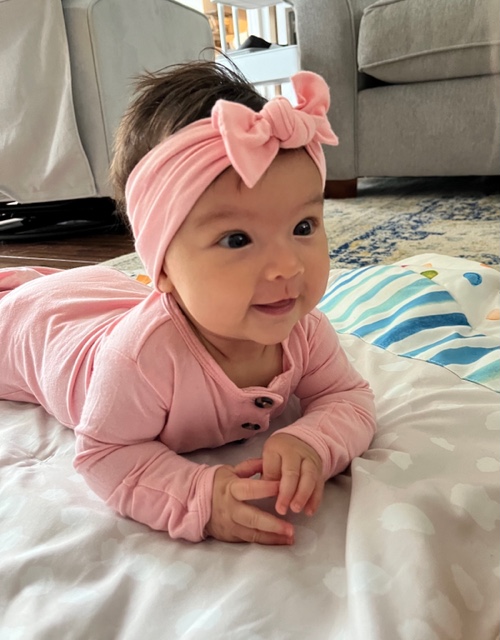
I’m sorry it took me so long to write. Since your arrival six months ago, life has been predictably busy. I started this website to record moments and memories of being a father when your big sister entered our world two-and-a-half years ago, and since then every piece has been about her. But I want you to know that is not a reflection of my love for you. 

In fact, it’s the opposite: Mama and I have been working hard to make sure you and Mayla have everything you need, and writing necessarily takes a back seat to those more important obligations. Some days, like yesterday when I had to work late, that means I leave before you wake up and get home after you’re asleep, and Grandma and Mama take care of you. I want you to know that if I could be home with you, I would, that my absence does not indicate a lack of love but rather an abundance of it. Last night you woke up upset a little after midnight; rubbing your tummy as you fell back asleep was more important than anything I did that day. 

I used to think, before you were here, that I had a finite capacity of love, doled out in parcels here and there to who and what I valued most—as if love were like time or energy. I worried that when you were born that I wouldn’t feel the same way about you as I do Mayla. I’ve never been happier to be wrong: You taught me that having a second child does not divide a parent’s love; it multiplies it. The past six months, watching you and Mayla grow, have been the richest of my life.

I was feeling down today, overwhelmed by responsibilities. So I watched a video of you on my phone: We were at the fair, waiting as Mama and Mayla ordered mac and cheese. I began tickling your belly and you squealed with glee, that thousand-watt smile staring up at me. 

I felt better after that.

Most people, when they meet you, have that same reaction. “She’s just so happy!” they’ll tell us, and we will have no retort. Your happiness is among the purest I’ve witnessed, right up there with Ama’s as she runs around our backyard. You rarely cry, and if you do you are easily soothed. When we get you up in the morning, or from a nap later in the day, your smile is impossibly true, and your laugh, as Mama puts it, is addicting. You are thrilled that you get to experience another day in your new world. I hope you never lose that.

You never stop moving. It started when you were in Mama’s belly, and it’s continued until now. Legs, arms, feet, hands—constantly in motion, forever searching and probing your physical limits. (I joke to anyone who will listen that you are going to be a Division I athlete, and I’m only like 40 percent kidding.) When we lay you on the floor, we are no longer surprised to find you several feet away just seconds later, reaching for the dog bed or putting a ball in your mouth. I hope you never lose that curiosity either. 

My favorite time of the week comes on Sunday afternoons, when I get to hold you for your afternoon nap. It’s just me, you, the sound machine, and my book. You lay on my chest, eyes closed and breathing softly, your round cheeks pressed against my shoulder, and there is nowhere I’d rather be, nothing I’d rather be doing, than sitting there with you in the quiet dark. 

I love you, Rory. You are the light of my world. I’m sorry it took me so long to write to tell you. 

Love,
Dada


Waiting, Again

Navigating everyone’s, including my own, expectations of when your child is supposed to arrive

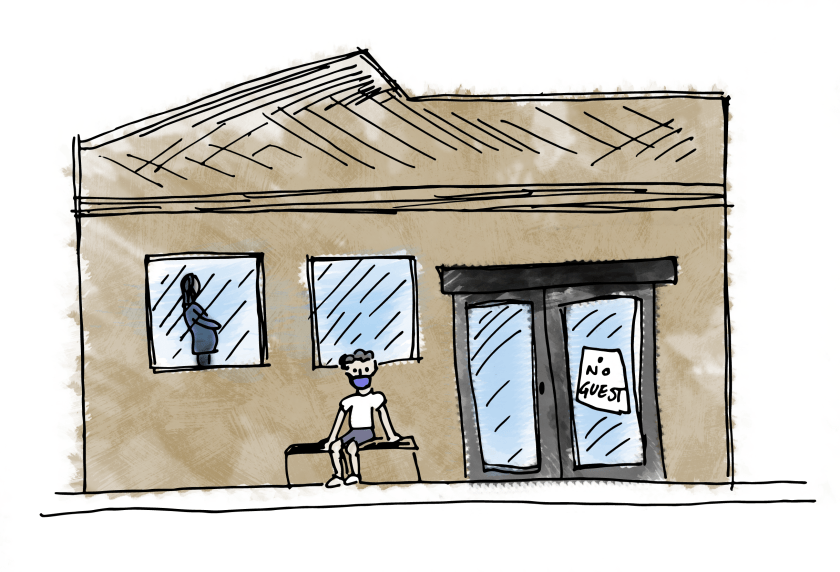
Illustration by Samantha Harrington

And so again we wait. Two years later, to the exact day, my wife, Carly, and I find ourselves in the same position we were in during those late winter days of March 2021: waiting for the arrival of our child, for the moment our world will shift and our lives will change. The result of that first wait, which ended 11 days after the due date, was nothing less than the light of our world, a strong little girl with a perfectly round face named Mayla.

You’d think I’d be better equipped, then, for this time. I am not. If anything, it’s worse. We were convinced that this baby, for whom we do not know the gender, would come early—that’s what they say about your second, right? The path has already been trodden by their older sibling, so they just come whenever they want, and invariably that’s before their due date, right? We’d definitely have a February baby this time, we told ourselves, no way that both babies would remain in Carly’s stomach well past their due date. No, we thought as the calendar turned from January to February, this baby was coming in a couple days, weeks at most. This baby was coming soon!

They were not. Carly thought she might be in labor the morning of Feb. 13, with intense contractions not far apart. The app on her phone told us to get our bags ready to head to the hospital; she started drafting an email to her supervisor, telling her that she’d be out of work earlier than planned. 

It is now March 6. That means every day for the past 21 I’ve been wrestling with the notion, the burden, that today could be the day. The expectation, more than anything, has wrecked me. I’ve been more stressed than necessary, and highly irritable. Every decision, from when to give my fifth graders a science test to what time I should run the next day, seems enormous, way more significant than it should be. Scheduling anything has come with the caveat that my wife could go into labor so I might have to miss it. I’m scared to be away from my phone for longer than five minutes. Every day is a swirling cocktail of emotions, of hope and excitement mixed with embarrassment and disappointment that I’m disappointed the baby hasn’t yet arrived. One day last week when I woke up Carly was unsure if I should go to work that day: She had been having consistent, strong contractions and didn’t want me to just have to turn around. I drove to work, convinced that in a few hours I’d be driving in the opposite direction, ready to experience a momentous life change. Nothing happened. Life continued that day as usual, save that I was carrying a nervous excitement-turned-disappointment in everything I did. 

The problem, of course, is not with the baby or Carly, no matter what some comments might lead us to believe (“Why hasn’t your wife had this baby yet?” “Why isn’t this baby here yet?”—as if they have autonomy). No, the problem is my, our, society’s expectation of babies arriving when they “should.” We are told, then conditioned to believe, that babies have a due date, and if, like a gallon of milk, they go past that date, they are considered “late.” If they come before it, they’re “early,” and if they are one of the rare few that are born on their due date, they are “on time.” Babies, in this view, are simply packages delivered by Amazon, or a stork.

As soon as the due date comes—I honestly dreaded it this time, because I knew what was going to happen in the following days—people from all areas of your life will pepper you for updates, look at you incredulously when you walk through the doors of your work, ask when the induction will be, greet you with “What are you still doing here?” All of it will be good-natured and well-intentioned, and you will do your best to smile and offer short, simple answers. And you will be grateful, ultimately, that you have a baby coming at all, forever aware that a child, your child, is a miracle. Plus, you understand that in their eyes, the calculus is simple: The baby was supposed to be here already, the baby is not here, what’s up with that? A baby coming a week past their due date doesn’t align with their expectations of how it should have happened (“No baby yet???? They’re so overdue. Wonder if they’ll ever come!”), and so they want to know why, and they will ask you. You will want to go somewhere, anywhere, to escape the burden of waiting. Instead, everywhere you will be bombarded with the same questions that you’ve been wondering about yourself for the past month. Perhaps what people don’t realize when they ask those questions is that, trust us, we’ve been asking, thinking about, the same ones. We do not suddenly remember that our child hasn’t been born yet when someone asks us. It’s occupied every neural bandwidth we possess for several weeks. There is no one that a “late” birth affects more than the parents of the child. We are trying to be patient.      

So therein lies the conflict: Society dictates that a baby is late if they’re not here by their due date, but the baby doesn’t know or care about when they’re “supposed” to be here. They don’t care that you want to get one more decent night’s sleep, or finish up the next project at work, or have another lowkey weekend. They don’t care about people’s expectations about their arrival, including their own parents’. They don’t care what’s most convenient for you, or for the people who ask you. They will arrive when biology dictates. 

Mayla was born 11 days late. In the past two years—which have been among the best of my life, watching her grow into a beautiful and independent and hilarious little girl—I have thought about that fact exactly zero times. When your child comes does not matter, not really, in the grand scheme of things. So long as they and their mother are healthy and safe, the timing, the due dates and questions and expectations—all of it is irrelevant. The most important truth is the most simple one: We will have a baby in our arms, soon. 

And so again we wait. The moment will come when our child enters the world and changes ours forever. And right then we will know that they came right on time.


Our Growing Family

The second time around, everything feels so much different. Is that OK?

Early one morning a few months ago, Mayla, our then-15-month-old daughter, walked into our room carrying a thin plastic tube that looked like a thermometer. She was wearing a pink hat with writing on the front I couldn’t yet read; I was still in bed, sleeping in as part of an early Father’s Day celebration.

Carly, my wife, followed her with a camera as Mayla approached the edge of our bed. “Give it to him!” she told her. She was quivering as Mayla handed me the tube that changed my life forever, again.


My initial reaction—jaw dropping, eyes widening, giant smile forming—was predictable: that classic combination of pure shock and unbridled glee, the what-am-I-supposed-to-say feeling that accompanies any revelation of big news. I was ecstatic. 

But then…then the news sunk in. Holy crap! We were having another kid! How were we going to provide for it? Where was it going to sleep? Will we have to go months without a paycheck like we did with Mayla since the new baby will also be born during the school year? What will Mayla think? What will our families think? What will our dogs think? I am going to be a father of two before I turn 30!

I went outside to the edge of our driveway to retrieve something from my car; I didn’t come back in the house until a half-hour later. I sat there, alone, for a long time, thinking, thinking, thinking. It was a beautiful day, I remember: mid-June, sunshine, no clouds. The car sat motionless in front of our house and felt small. I should go back in the house, I thought. I stayed in the car. 

Finally I went back inside. I needed something to do so I started washing dishes; there, scrubbing plates and bowls, looking out into our backyard, I thought about our new future with some combination of excitement, trepidation, and something I couldn’t identify: a feeling of stupidity, maybe, for not preparing more emotionally and logistically. Carly and I had discussed having a second child, of course, but we weren’t planning on trying to have one until a few months later, so they would be born during the summer months when we were both off from work. As two educators working in the public-school system, we had no maternity or paternity leave, so any days we took to care for our newborn child would be unpaid or taken from our (relatively paltry) banks of leave. Compounding my stress was the fact that a few days before, I had found out that I hadn’t advanced to the final round of interviews for a new job that would have paid at least double my teaching salary; one of the reasons I wanted the new position was to avoid this exact scenario of having to worry about finances when we decided to grow our family. Now, within the span of a few summer days, I didn’t get the job and we were having another baby. 

I experienced the entire spectrum of human emotion the day we found out we were having a second child. But the biggest question ate at me that day and for weeks after: Why wasn’t I more excited?


When we found out we were having Mayla, it was also a relative surprise, but everything—from picking the color of her nursery walls to choosing her name—felt so big, so important, so new that I didn’t have time or the mental capacity to worry about the things I was now worrying about with the second (I spent most of that extra brain space worrying about having a pregnant wife in the throes of a pandemic). 

The night we found out about Mayla, we watched What to Expect When You’re Expecting and treated ourselves to takeout; this time I spent most of the day in our home office researching Roth IRAs and made frozen pizza for dinner. With Mayla, we spent hours and hundreds of dollars designing her nursery; this time we debated even making one. With Mayla, we spent every spare moment preparing for her arrival, buying clothes, updating the baby registry, researching baby products; this time, life just kind of continued as normal. 

I felt awful, of course, for feeling this way; this was not how I wanted to welcome a new life into the world, worrying about logistics and finances. I didn’t want our second kid to think that I wasn’t, we weren’t, excited about them joining our family. I didn’t want them to think they were simply a financial burden. I didn’t want them to think we didn’t want them.

Then there was Carly, who was about to undergo a physically and emotionally demanding nine-plus months and who was as shocked as me that she was pregnant so soon. She was, naturally, processing a lot of emotions as well, and I was too caught up in my own to be there for her. For the first couple of days after we found out, I was not the husband I strive to be.

Finally, there was Mayla. I started looking at her differently: She had been the center of our universe for so long and now she would have to share attention and space and food and clothes with her little brother or sister. Sometimes, when I looked her in the eyes, I felt a pang of guilt: She didn’t know what was happening and how it would affect her. She had become my—our—everything and now that was going to drastically change and she had no control or say over it. How do you explain all of that to an 18-month-old?

I finished washing the dishes and took a deep breath.


Eventually, after a few weeks or maybe even months, I realized that two things can be true: I can be both truly excited about having another kid and worried about the logistics of bringing them into the world. It’s OK to be worried, I learned. It’s OK to give yourself some grace.

I realized, too, that my concern was all rooted in love: I was worried because I didn’t want our second kid to not have the best life we could offer them. It is part of my responsibility as their parent to make sure that their needs will be met, that we will be able to support them in every way we need to. Being a father encompasses more than emotion. We have to demonstrate our love in a multitude of ways: working hard to support our families, making meals and cleaning the kitchen after, taking care of those small, quotidian, often unsexy tasks that can easily fall through the cracks of a busy life. Why wasn’t I more excited when we found out we were having a second kid? I think that’s the wrong question. I think a better one would be: How can we make sure we show our love for this baby in every possible way?  

This website was borne of that goal, as was my new perspective on teaching and working and time itself. I used to think that a dad is failing if he doesn’t spend every spare moment with his child. Being present in their life is still the most important thing we can do, but fatherhood has other duties, too, and we’re not fulfilling our mission if we don’t perform those as well. We can show our love with our heart and our head. It is difficult, sometimes, to perfect that balance, but it’s worth attempting because it’s the most important role we’ll ever occupy.

And Mayla, well, we realized Mayla’s going to be fine. Most nights before we put her to bed, as she’s laying in Carly’s arms, her blinks getting progressively heavier as she clutches her doll, we ask her to say goodnight to baby. And my daughter leans over to my wife’s growing belly and kisses it softly.     


Join our mailing list!

Subscribe to the Essays of Dad newsletter, a weekly email with parenting stories, background on essays, book recommendations, and more.

Processing…
Success! You're on the list.