Ultrasounds Are For Dads Again, Too

This time, I was allowed to attend my wife’s ultrasound. Were my expectations too high?

Illustration by Samantha Harrington

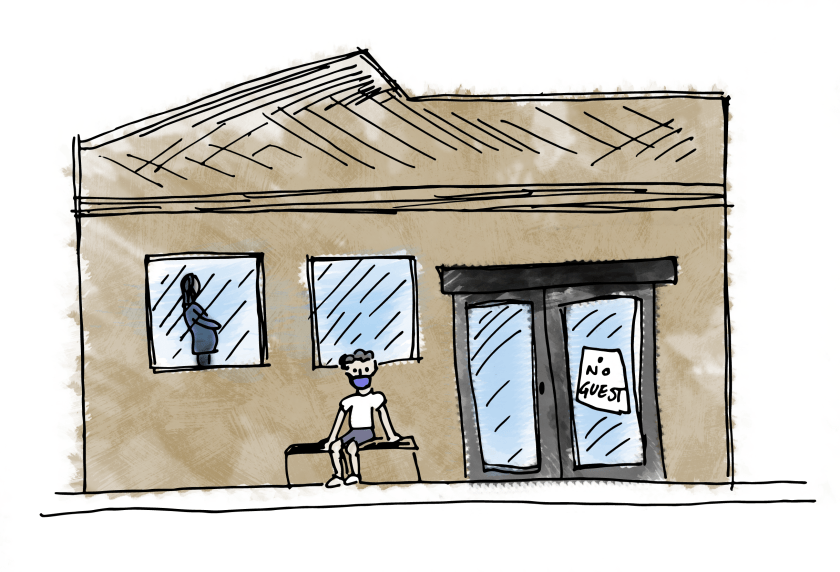
For 40-plus weeks, I sat alone, staring at the bricks. Every time my wife, Carly, had a prenatal appointment for our first child, now a thriving year-and-a-half-old named Mayla, I stayed in the car and watched her waddle into the birth center by herself. It was peak COVID, late 2020 and early 2021, and to minimize risk partners were not allowed in. 

This being pandemic America, there were vastly different opinions on whether this was right, but one thing mostly everyone could agree on was that it sucked for both dads and moms. Mayla was our first child and first pregnancy, and I wanted more than anything to hold Carly’s hand as we listened to her heartbeat for the first time—have you never heard the Brett Young song!—and pepper the midwife with well-intentioned but probably annoying questions. I wanted to watch our daughter wiggle and squirm and was that a smile? I wanted to, simply, be there.

Instead I watched, through my windshield, a sad little gray tree transition from winter to spring. 

Carly is pregnant again. COVID is now either under control or ignored. Partners, those parking-lot heroes from pandemic pregnancies, are allowed to attend prenatal appointments again. There are, for the first time in over a year, at least a few dads roaming the halls of OB-GYN offices, looking around curiously, wondering if they belong in this brand new world.

And so it was a few weeks ago that I walked into Carly’s OB for the 20-week anatomy scan, the second time I’d ever stepped foot in the building (the first was for an early ultrasound, but it was so short and they didn’t have a chair for me in Carly’s room that the whole thing lasted maybe seven minutes so I don’t count it; this time was for real).   

We checked in and waited; we had both taken the morning off from work so we had that excited feeling that we were doing something special (and the evergreen realization that life outside of a school building really does carry on normally). My first impressions were that it looked…like a doctor’s office: not-too-bright fluorescent lighting, friendly but not overly friendly staff, magazines strewn across wooden side tables next to pale vinyl chairs. 

About 10 minutes later we were called back by a woman with the name of a U.S. state, who led us into a dim room that had changed so many lives. The overwhelming feature of this ultrasound room was delicate machinery: computers and sleek-looking instruments and lots and lots of screens. Everything was either silver, black, or gray. There was a giant TV hanging from the wall, and the ultrasound tech had Carly lay on the medical chair across from it. I sat in a fabric chair right next to it.

The tech asked us if we wanted to find out the gender; we held strong and said no (how tempting it was, though, to say you’re not going to find out and then crack at the moment when you could). The tech then rubbed a cold jelly all over Carly’s stomach, turned on the TV, and began moving the ultrasound wand across her midsection. I rested my hand on her leg. And then, like magic, our second child appeared on the giant screen in front of us. 

Not that we could tell: There was an image on the screen, sure, but it mostly just looked like a series of ever-shifting gray shapes in a sea of black. The tech seemed to move the wand continuously, taking pictures and coding each one with a (to me) unintelligible combination of letters and numbers. She paused perhaps once or twice to explain what we were looking at, but for the most part the room was silent, save for the familiar hum of technology. 

And that’s how it was for the next 30-plus minutes. There was moment of excitement when, for the first time, we could make out our baby’s face and position: there he was, or she was, our second kid, up on the screen in front of us, kicking their little legs, squirming and shifting, and I couldn’t help but wonder if they knew we were watching them and they were saying hello, and it seemed, maybe, like we were meeting for the first time. 

Or maybe we were dreaming. The room was warm and quiet, Carly was reclining comfortably, and the light was low. I couldn’t believe it, but during the moment I had anticipated for so long, the time I was actually in the room and not FaceTiming in from the parking lot, I actually felt my eyelids getting heavy. Later Carly told me she felt the same way.

And that, perhaps, was the most telling takeaway from the ultrasound: Aside from the moment of genuine wonder and joy when we could clearly see our child, the entire experience felt oddly antiseptic, scientific, devoid of the emotional weight I had preemptively assigned to it in the solitude of my car. I’m not sure what I expected—balloons and streamers and a “Welcome, Dad! Here is a moment that is going to change your life forever!” sign?—but this was not it. I wasn’t disappointed but I was definitely surprised.

Maybe, and I’m guilty of this often, because of my exclusion the first time I had built it up too much and it was never going to live up to those unreachable expectations. Maybe pandemic dads now have an unrealistic and idealistic perception of their partner’s doctor’s appointments. Maybe the grass, especially from the loneliness of the parking lot, is always greener.

Maybe I simply approached the visit in the wrong way and I should focus more on the other thing that struck me from our visit: the marvel of ultrasound technology. I always knew, of course, that these machines and tools existed—we have an ultrasound picture in a frame in our living room—but watching them in action was a wholly different experience and filled me with gratitude for their existence.

Because, when Carly and I left the office that day for a breakfast date at our favorite restaurant, the only thing that mattered was that we had fully seen our healthy baby. And I could, for the first time, walk out of the building holding my wife’s hand, and this time the bricks were behind me.


Join our mailing list!

Subscribe to the Essays of Dad newsletter, a weekly email with parenting stories, background on essays, book recommendations, and more.

Processing…
Success! You're on the list.

The (Relatively) Young Parent Paradox

Do you miss out on your true 20s if you become a parent before they’re over?

Mayla, and younger her brother or sister.

It is, I think, your first realization that you are no longer young: One of your friends—or simply someone you graduated with—becomes a parent. It happened for me soon after college, when I was 22 or 23 and a few relative acquaintances got married and had children within a year of throwing our caps and gowns into the spring air. I remember thinking, I didn’t even know people my age were allowed to have kids. It seemed like just the other day that I was walking past them on the way to ECON 410, or pretending to study at the table next to them in the library. We were so young.

Part of the reason for this way of thinking was the fact that I was nowhere close to becoming a father. My longest relationship up to that point in my life had lasted a couple of months, I was confused about what I wanted to pursue as a career, and I was living more than 2,000 miles away from most of my friends and family. I was making frozen meals from Trader Joe’s (which, to be clear, are objectively delicious) in the garage kitchen of a subletted house most nights for dinner. I also looked like I was 17 and was probably immature. No, I was not ready to become a dad. 

But perhaps an even bigger reason for my surprise was the fact that it was increasingly and strikingly rare, among my oft-discussed/criticized Millennial generation, for a 22- or 23-year-old to have a baby. We are, of course, a selfish generation that delays parenthood (or doesn’t have kids at all!), which, of course, is leading to the inexorable decline of America. I looked at these new young parents with some mixture of curiosity and pity: Why did they want to sacrifice their 20s to the whims of a child? They couldn’t be that great, could they? This thinking was a product of a pretty significant societal shift: If I were the same age without kids living decades earlier, I would have been the one viewed as the outcast. Not having a child in your early 20s, for much of the 20th century, was uncommon and maybe even frowned upon.

I’m a dad now. My wife, Carly, and I have an 18-month-old daughter named Mayla, with another on the way: Carly is 21 weeks pregnant. I will have two children before I turn 30—something, had you told me seven years ago, about which I would have laughed out loud because it seemed so farfetched. Life, as the saying goes, comes at you fast.  

But, despite the joys of fatherhood and my deep love for Mayla and her soon-to-arrive little brother or sister, that same thinking that I had when I was 22 still sometimes creeps in: Are other people my age thinking about me, about us, the same way I did about them? We’re older now, yes, but not by that much. We are still not the norm

Am I growing up too fast?


Last week, after a particularly long day at work, I went on a run on the trail closest to my school. I’d run this trail, a winding, well-groomed section of the Mountains to Sea, dozens of times since we moved to Asheville four years ago, but on this run my mind wandered back to those early days when it was just me and Carly, living in a two-bedroom apartment close to downtown as we attempted to navigate our mid-20s. Life, I thought as I snaked through the leaves on that recent run, seemed so simple then: working and running and walking the dog before dinner. Our biggest decision—and I recognize that rose-colored glasses are indeed real—was often what new restaurant we should try on Friday night. 

The leaves fell around me, painting the trail in browns and yellows and reds as I thought back to those times with an undeniable nostalgia and maybe even a bit of jealousy. Everything now, with a child, especially during the week, seems so frantic, so rushed that those days without the responsibilities of parenthood seem (justifiably or not) like an oasis of freedom.

Part of it, probably, is true. There is no denying that life with a child is vastly different from life without one. Becoming a parent is simply a sudden recognition that you are now responsible to sustain and nurture more than one human. For the first however many years of your life, your primary responsibility was to make sure you ate, slept, put on pants, etc.; as a dad, as a mom, as any type of caregiver, those responsibilities multiply. 

That doesn’t take into account the fact that your child, especially a baby or toddler, becomes the center of your family’s solar system. They have to eat and sleep at certain times, and when they’re not doing either of those, they need to be entertained. This is, of course, incredibly rewarding—I still have not discovered any better use of my time than reading to Mayla as she sits, enthralled in a book she’s read dozens of times and smiling because she knows that the dragons are about to burn down the house because they unknowingly ate spicy salsa—but also, it’s fair to admit, incredibly exhausting. Apart from sitting your child in front of a screen, something we try extremely hard to never do (and, honestly, something that Mayla often doesn’t have the patience for anyway), there is little to no downtime when your toddler is awake. 

The other part of my nostalgia, of the frequent questions about whether I’m growing up too fast, is perhaps more selfish. Your 20s are, the thinking goes, supposed to be the time you focus on yourself: figuring out your career, finding your new home, having fun with your friends. None of that is impossible with a child, but it’s different, accelerated. Sometimes I look at friends/acquaintances around my age, single and living in major cities, working 60-plus hours a week but meeting coworkers for happy hour and going out every weekend, taking cabs and ordering Uber Eats from the office—and it seems kind of fun, a thrill. (Again, the grass is always greener…) Did I miss that—am I missing that—because I became a dad at 27? 

I finished the run and drove home to take Mayla to the park.


Maybe, as ever, there is more than one way of looking at it. Maybe, and not to get too philosophical here (though as a dad you start thinking deeper about most things), every person has a general path set for them, and small and big choices here or there determine its exact curves and undulations. Maybe life—maybe your 20s—is simply a series of mistakes and twists and waves, and it’s up to you to ride, learn from, enjoy them all, and trust that it’s ultimately going to work out the way it should.

I don’t regret becoming a dad at 27, or having two children before I turn 30. I wonder, of course, how my life would have been different had the timing or circumstances of a few small things been different—had I chosen a different major in college, had stuck it out in sports journalism, had I never moved back to Florida—but that’s forever secondary to the intense joy and gravity of being a dad. 

When I came home the other day, Mayla’s face lit up as she exclaimed, “Dada!” She ran to me and wrapped my legs in a hug. And right then I knew that I had grown up at exactly the right time.    


Join our mailing list!

Subscribe to the Essays of Dad newsletter, a weekly email with parenting stories, background on essays, book recommendations, and more.

Processing…
Success! You're on the list.

Can You Be a Good Dad and a Good Runner?

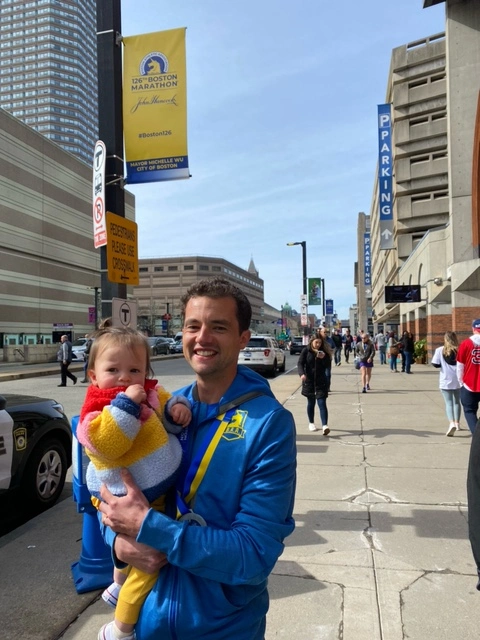
Mayla and me, after Boston.

Recently Mayla, our 18-month-old daughter, has rediscovered a book she enjoys, which means that she insists that we read it to her, multiple times a day. It’s called Dream Big and it’s about powerful women throughout history: There’s Katherine Johnson writing complex math equations on a chalkboard, Jane Goodall playing with chimpanzees, Zaha Hadid designing a sleek building.

Mayla enjoys the illustrations—caricatures of each person surrounded by scenes of their professional interests—and short sentences, but she gets the most animated on the page featuring Florence Griffith Joyner, the decorated Olympian sprinter with multiple world records. As soon as she sees the illustrated Flo-Jo running on a track and hears me read “Dream fast,” she points to the page and exclaims, “Dada!”

My daughter knows her dad is a runner.


It is, of course, hilarious and adorable that Mayla compares me to one of the most famous track athletes in history. To her growing and forever connecting mind, a runner is a runner, regardless of talent or accomplishments. To her, Flo-Jo and I are kindred spirits. 

But what struck me the most was that she recognized that I am a runner, that she knew to make the connection. We run together sometimes, and she has watched me run around the neighborhood or park or famous streets of Massachusetts, so I guess it shouldn’t be surprising. But it still made me smile that she associated running with me.

Raising a child has of course altered my life in countless ways, but one of the few things that has remained constant, one of the few similarities between pre-Mayla life and post-Mayla life, is running: a five to seven to 10-mile run, six days a week, on the trails or around the park or through the greenways.

I’ve been a runner for more than 10 years, and it, like fatherhood, has changed my life for the better. Its physical benefits are clear, it’s brought me several of my closest friends, and it indeed does often make your mind clearer and attitude better. I have reached the point where I need running: I need its rhythm and clarity and consistency, its daily exploration of yourself and the world. I am not the same person when I do not run. 

This necessity has only been exacerbated by the challenges and questions of fatherhood. Running has helped me navigate being a father, has helped me contextualize those challenges and answer some of those questions (you have a lot of alone time on runs), and I think it’s fair to say it’s even made me a better husband and dad.

But these last 18 months of fatherhood have also been the only time that, on certain days, I feel bad about running, something I’ve felt good about for most of my life. On those days there lingers a question that, I think, most parents who spend hours away running or biking or any other endurance sport have wrestled with: Is it OK to be doing this?


Time, of course, is the most valuable currency to a toddler. They don’t know or care whether you are away at work or on a run or at the store buying groceries; you are simply not there and that is all that matters to them. Their view on time, then, is binary: You are there with them, or you are not. 

When I was training for Boston, I was not there a lot. Marathon training necessitates hours that turn into days that turn into weeks that turn into months spent performing, as the author John L. Parker Jr. puts it, “that most unprofound and sometimes heart-rending process of removing, molecule by molecule, the very tough rubber that comprised the bottoms of [your] training shoes.” Running is a sport that demands sacrifices, and as a dad I’ve realized the most significant one is your time: It does not care if you are a father or a husband or an employee; it does not care how you spend your time outside of its relatively simple, often cruel mandates. It, like a toddler, possesses a black-and-white view of time.

The dilemma, then, is plain: Your child wants—needs—you to be there with them, guiding them through their new world, but running commands that every day you spend an hour, sometimes more, devoting your time and energy to something else. So, as a parent to a baby or toddler, you begin to justify your absences, why you aren’t there as often as you or they want you to be: Running is a metaphor for life: What you put in is directly proportional to what you get out. It teaches perseverance and instills physical and mental strength. Chasing something big and exploring the edges of your being are important.  

But to a toddler, these justifications ring hollow. They don’t care about or even recognize any of these grand lessons about life; they just want you to read a book or build a tower with them. You just spent most of their waking hours away from them at work, and after that you spend more running. There are, you remember walking through the door on those late afternoons, only 24 hours in a day.

Your spouse, too, notices and perhaps sometimes resents the time you aren’t there to help them raise your child. They deserve a present, supportive husband, and often you’re off chasing some dream they might not fully understand but ultimately support because they know it’s part of you. You are reminded, time and again, that one of their truest expressions of their love is recognizing and allowing that.      

So what do you do? You could, theoretically, just stop running, choose another, less time-intensive sport, leave it behind for good. You could find something else to replace it. You could attempt to quiet the voices, assuage the guilt, telling you that you aren’t around enough. Or you could attempt to find some type of balance that makes it all work.

Perhaps the biggest irony is that to think about these questions and their solutions all you want to do is go for a run.


There are, of course, countless other parents navigating the challenge of raising a child and pursuing an endurance sport, and countless who do it well, with clarity and grace. There are also professional runners and cyclists and swimmers who devote their entire lives to the sport and still make time for their kids. Being a runner and being a good parent aren’t and shouldn’t be mutually exclusive.

I’ve only been a dad for 18 months, and I probably haven’t mastered the balance yet. But perhaps the biggest lesson I’ve pulled from this relatively short time as a father is the power of our time: it is forever limited, and how we spend it defines who we are and what we value.

So when I get home after work and running, I leave my phone upstairs so I’m not distracted. I refuse to work on the weekends and run only once, early on Sunday morning before Mayla wakes up or during her nap in the afternoon. I’ve become as efficient as possible at work and on runs so I don’t waste any precious time that could be spent with Mayla. All of this has led me to have a different, clearer view on running: I realize now it’s a privilege, something I get to do, that it’s not and never has been guaranteed. I appreciate the sport more now than I ever have. 

Perhaps the clearest manifestation of that realization is running before work to maximize my time with Mayla in the afternoons. On those days I’ll wake up early, drive to work under the stars, and begin clipping off miles in the morning dark, thinking of my daughter as she dreams.


Join our mailing list!

Subscribe to the Essays of Dad newsletter, a weekly email with parenting stories, background on essays, book recommendations, and more.
Processing…
Success! You're on the list.

Our Growing Family

The second time around, everything feels so much different. Is that OK?

Early one morning a few months ago, Mayla, our then-15-month-old daughter, walked into our room carrying a thin plastic tube that looked like a thermometer. She was wearing a pink hat with writing on the front I couldn’t yet read; I was still in bed, sleeping in as part of an early Father’s Day celebration.

Carly, my wife, followed her with a camera as Mayla approached the edge of our bed. “Give it to him!” she told her. She was quivering as Mayla handed me the tube that changed my life forever, again.


My initial reaction—jaw dropping, eyes widening, giant smile forming—was predictable: that classic combination of pure shock and unbridled glee, the what-am-I-supposed-to-say feeling that accompanies any revelation of big news. I was ecstatic. 

But then…then the news sunk in. Holy crap! We were having another kid! How were we going to provide for it? Where was it going to sleep? Will we have to go months without a paycheck like we did with Mayla since the new baby will also be born during the school year? What will Mayla think? What will our families think? What will our dogs think? I am going to be a father of two before I turn 30!

I went outside to the edge of our driveway to retrieve something from my car; I didn’t come back in the house until a half-hour later. I sat there, alone, for a long time, thinking, thinking, thinking. It was a beautiful day, I remember: mid-June, sunshine, no clouds. The car sat motionless in front of our house and felt small. I should go back in the house, I thought. I stayed in the car. 

Finally I went back inside. I needed something to do so I started washing dishes; there, scrubbing plates and bowls, looking out into our backyard, I thought about our new future with some combination of excitement, trepidation, and something I couldn’t identify: a feeling of stupidity, maybe, for not preparing more emotionally and logistically. Carly and I had discussed having a second child, of course, but we weren’t planning on trying to have one until a few months later, so they would be born during the summer months when we were both off from work. As two educators working in the public-school system, we had no maternity or paternity leave, so any days we took to care for our newborn child would be unpaid or taken from our (relatively paltry) banks of leave. Compounding my stress was the fact that a few days before, I had found out that I hadn’t advanced to the final round of interviews for a new job that would have paid at least double my teaching salary; one of the reasons I wanted the new position was to avoid this exact scenario of having to worry about finances when we decided to grow our family. Now, within the span of a few summer days, I didn’t get the job and we were having another baby. 

I experienced the entire spectrum of human emotion the day we found out we were having a second child. But the biggest question ate at me that day and for weeks after: Why wasn’t I more excited?


When we found out we were having Mayla, it was also a relative surprise, but everything—from picking the color of her nursery walls to choosing her name—felt so big, so important, so new that I didn’t have time or the mental capacity to worry about the things I was now worrying about with the second (I spent most of that extra brain space worrying about having a pregnant wife in the throes of a pandemic). 

The night we found out about Mayla, we watched What to Expect When You’re Expecting and treated ourselves to takeout; this time I spent most of the day in our home office researching Roth IRAs and made frozen pizza for dinner. With Mayla, we spent hours and hundreds of dollars designing her nursery; this time we debated even making one. With Mayla, we spent every spare moment preparing for her arrival, buying clothes, updating the baby registry, researching baby products; this time, life just kind of continued as normal. 

I felt awful, of course, for feeling this way; this was not how I wanted to welcome a new life into the world, worrying about logistics and finances. I didn’t want our second kid to think that I wasn’t, we weren’t, excited about them joining our family. I didn’t want them to think they were simply a financial burden. I didn’t want them to think we didn’t want them.

Then there was Carly, who was about to undergo a physically and emotionally demanding nine-plus months and who was as shocked as me that she was pregnant so soon. She was, naturally, processing a lot of emotions as well, and I was too caught up in my own to be there for her. For the first couple of days after we found out, I was not the husband I strive to be.

Finally, there was Mayla. I started looking at her differently: She had been the center of our universe for so long and now she would have to share attention and space and food and clothes with her little brother or sister. Sometimes, when I looked her in the eyes, I felt a pang of guilt: She didn’t know what was happening and how it would affect her. She had become my—our—everything and now that was going to drastically change and she had no control or say over it. How do you explain all of that to an 18-month-old?

I finished washing the dishes and took a deep breath.


Eventually, after a few weeks or maybe even months, I realized that two things can be true: I can be both truly excited about having another kid and worried about the logistics of bringing them into the world. It’s OK to be worried, I learned. It’s OK to give yourself some grace.

I realized, too, that my concern was all rooted in love: I was worried because I didn’t want our second kid to not have the best life we could offer them. It is part of my responsibility as their parent to make sure that their needs will be met, that we will be able to support them in every way we need to. Being a father encompasses more than emotion. We have to demonstrate our love in a multitude of ways: working hard to support our families, making meals and cleaning the kitchen after, taking care of those small, quotidian, often unsexy tasks that can easily fall through the cracks of a busy life. Why wasn’t I more excited when we found out we were having a second kid? I think that’s the wrong question. I think a better one would be: How can we make sure we show our love for this baby in every possible way?  

This website was borne of that goal, as was my new perspective on teaching and working and time itself. I used to think that a dad is failing if he doesn’t spend every spare moment with his child. Being present in their life is still the most important thing we can do, but fatherhood has other duties, too, and we’re not fulfilling our mission if we don’t perform those as well. We can show our love with our heart and our head. It is difficult, sometimes, to perfect that balance, but it’s worth attempting because it’s the most important role we’ll ever occupy.

And Mayla, well, we realized Mayla’s going to be fine. Most nights before we put her to bed, as she’s laying in Carly’s arms, her blinks getting progressively heavier as she clutches her doll, we ask her to say goodnight to baby. And my daughter leans over to my wife’s growing belly and kisses it softly.     


Join our mailing list!

Subscribe to the Essays of Dad newsletter, a weekly email with parenting stories, background on essays, book recommendations, and more.
Processing…
Success! You're on the list.

Lessons from a Pandemic Pregnancy

Illustration by Samantha Harrington

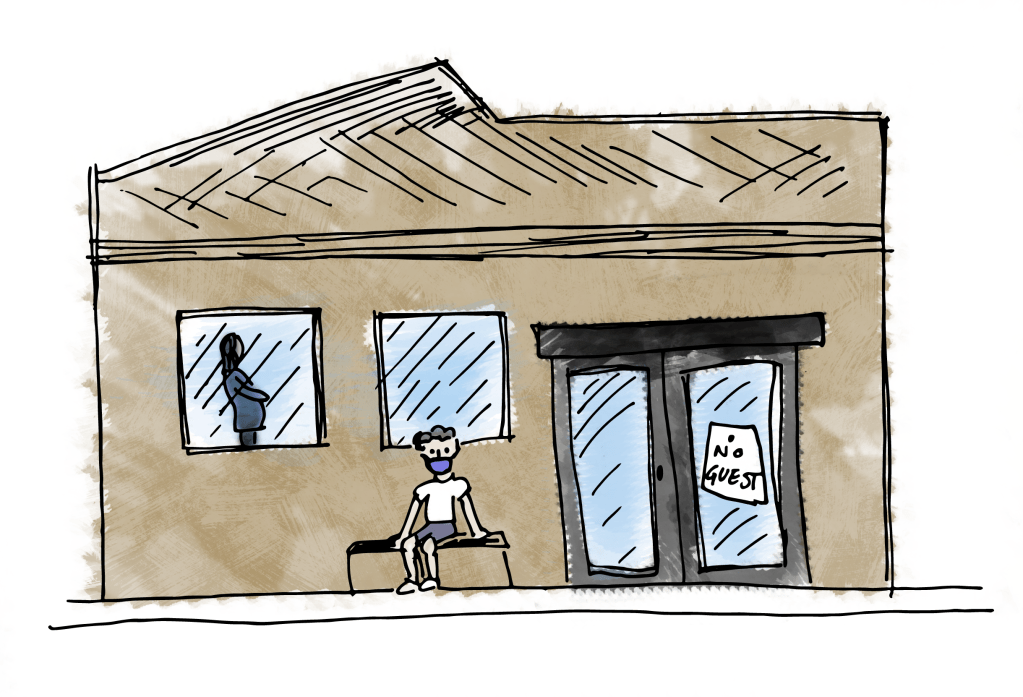
Every Thursday for about a month, I sat alone in my car, staring at the red-brown bricks of a birth center. My pregnant wife, Carly, was inside one of its rooms, being poked and prodded and tested to ensure she and our daughter were healthy and strong. To minimize risk during the worst stages of the pandemic, partners were not allowed in. Sometimes the appointments were quick, lasting no longer than 20 minutes; other times I sat alone for a couple hours.

During these solitary moments, I always noted my view from the car: those bricks, lots of plants, a thin gray tree. We’d been to the birth center so many times, and I’d sat by myself in the car so many times, staring at the same pieces of the world, that we saw winter transition to spring: By the end, the day before our daughter, Mayla, was born, the sad gray tree had started sprouting little white flowers. 

The symbolism—our baby coming into the world as flowers began to bloom after a long winter—was not lost on me. Carly and I, on long, cold walks around our neighborhood, would talk about how everything, soon, would be different: We would have a baby girl, and the days would be longer and warmer, and summer break was on the horizon, and we could visit family and friends, and the world, for so long dominated by a stubborn pandemic, would return to some type of normal (or so we thought). On the best days, we were filled with hope.

For the last three-plus months of the pregnancy, that’s all we had. Alarmed by stories of mothers-to-be facing more severe COVID cases, and with vaccines unavailable for us until the early spring, we were, more than most, locked down. We worked from home. We bought an annual subscription to Instacart and used it weekly. We ordered delivery, asking drivers to leave the food at the door; if we were feeling adventurous, we got takeout, our lone semi-weekly venture into the world. Those trips inside the restaurant terrified me, even as Carly stayed in the car. (One night, a week or so before the due date, I spent the better part of three hours worrying if I got COVID from a maskless woman chasing her daughter around a restaurant where I was waiting for food.) I used to half-jokingly tell my friend, also an expectant father, that if everyone in the world had a pregnant partner, the pandemic would recede in days. 

Carly, to her credit, rarely complained about the hand she was dealt. She had looked forward to pregnancy, and motherhood, for most of her adult years, and this pandemic pregnancy of course did not live up to her expectations; but she maintained, better than most, perspective: She knew that her, and our, problems were minor held up against the ones affecting hundreds of thousands across the country and world.

We, like everyone else, made sacrifices to keep our family safe. Carly had wanted a big baby shower; we had one on Zoom and another with three friends sitting in spaced-out chairs in our backyard. She wanted to go home to Florida for Christmas to spend time with family and show off her growing bump; we ended up, to minimize risk, staying by ourselves in North Carolina. She wanted to attend in-person childbirth classes, to meet other moms, to feel connected to a community; she was, for weeks and then months, basically alone.

That included all of her appointments: The first time I was allowed in the birth center was the day Mayla was born. In the car I cried only once, on week 41, when she had to go to a different building for a different test; maybe I missed my familiar bricks and tree. Remaining by myself in the parking lot was a small price to pay to protect nurses, doctors, and mothers, but I wanted desperately to be in the room with her, holding her hand and watching Mayla squirm on the little black-and-white screen. The first time I saw our daughter, at the 20-week ultrasound to confirm her heartbeat, was via FaceTime as I sat in the parking lot.

A lot of it, to use the formal phrase, really sucked. But the most important truth never changed: She and Mayla remained healthy for nine-plus months. And this spartan existence, with just the two of us spending together lazy days and slow nights, was perhaps the one of the best ways to culminate our pre-parenthood lives. We would work, at home, until mid-afternoon, go on a walk around the neighborhood as the sun slowly sank below the mountains, talking about the baby and plans and the world. When we got back home we’d stretch in the living room, listening to music and playing with the dogs, before making something warm for dinner and eating it while we watched “New Girl.” Then we’d clean up and get ready for bed, without rushing, and watch TV or just sit there, talking and marveling at Carly’s moving stomach, letting it sink in how wild, how wonderful it was that there was a baby, our baby, in it; and she would drift off to sleep, and I’d read with the lights out before joining her in dreaming.

Now, of course, when life has sped up and responsibilities have multiplied, we both miss those unhurried days. Now we work and coach and come home and work some more and eat dinner and pack our lunches for the next day and wash bottles and give Mayla a bath and then put her to bed and by the end of the day we’ve seen her, and each other, for two, maybe three hours. And then we do it all again the next day.

Our pandemic pregnancy was stressful and isolating and restrictive. But it was also, toward the end, peaceful, maybe even necessary. We were forced, by circumstance, to return to basics, to prioritize what was essential and forget all else. We were forced to confront a truth that deep down we knew but the rush of life had complicated: that simplicity—family, and food, and books, a warm sun and laughter—is all we really ever need. Everything else is periphery. There is always time to do what matters.

So every time I see a pregnant woman now, keeping a baby alive in the throes of a pandemic, I say a little prayer of protection, and hope that she can find peace amid all of the chaos. I appreciate her, and her partner, sitting alone in the parking lot, staring at bricks, on a deeper level than I ever thought I would.


Join our mailing list!

Subscribe to the Essays of Dad newsletter, a weekly email with parenting stories, background on essays, book recommendations, and more.

Processing…
Success! You're on the list.

On the Power of Women

Illustration by Samantha Harrington

Somehow, they sold you short. For months, years if you’re around the right people often enough, they told you this would be “the greatest day of your life” and “there’s no other feeling like it in the world” and “cherish every second because it’s over like that.” They tried, with the vocabulary available to them, to describe something that was beyond words, beyond communication, beyond, even, comprehension.

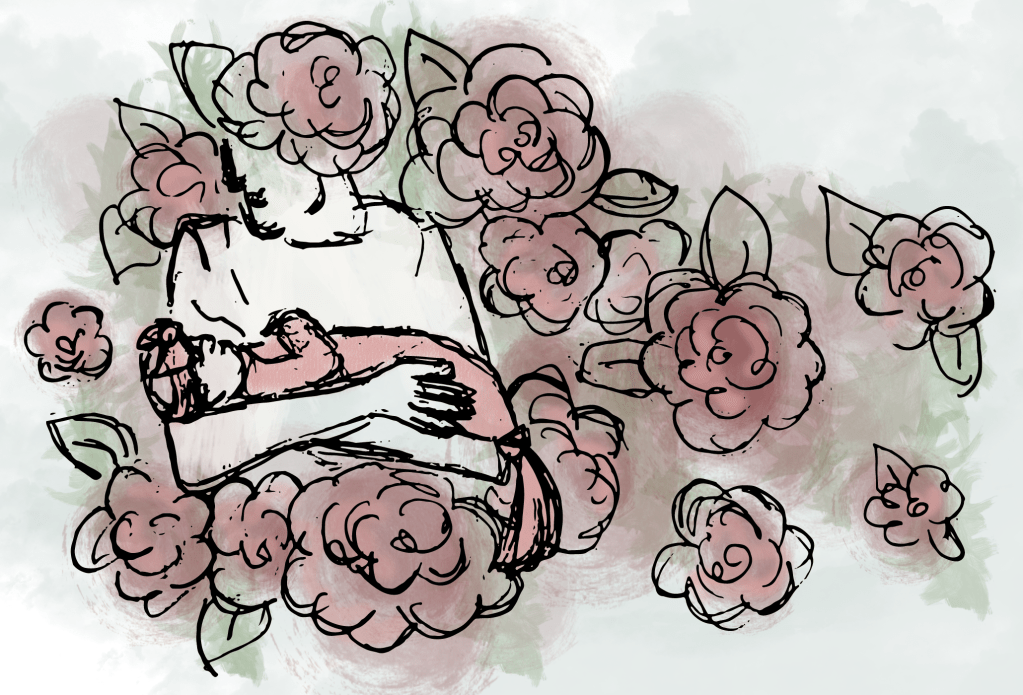
They did not tell you, in the moment your daughter, Mayla Ruth, entered the world, as you watched the midwife unwrap the umbilical cord from her gray neck and she took her first gulp of oxygen, that your own chest would fill with a light you’d never felt before as around you time slowed and surroundings blurred. They did not tell you, as she was placed, softly and immediately, on your wife’s chest, that your head would, instinctively, fall there as well, the first moments of your new family captured not in a picture but solely in your memory, where they will live forever. They did not tell you, as your wife exclaimed, “I did it!” through relieved, joyous, clipped breaths, that you would be crying more than your newborn daughter, the tears falling under your cloth mask. They did not tell you, when they described her, that words like “beautiful” and “gorgeous” and “precious” were somehow not powerful enough; angelic, maybe even divine, would come closer. They did not, could not, tell you any of this, and perhaps that was for the best, because this was, after all, something, like watching the Northern Lights or viewing the Earth from space, that could only be felt.

The intensity of those feelings, of that love, for your daughter were matched only by the same ones for your wife, and the gratitude you felt for the people who delivered your baby: the nurses and midwives at the women-run birth center who guided you through the most intense, and greatest, day of your lives. All of them reminded you, on International Women’s Day no less, of the irrepressible, imperishable power of women.


You learn a truth soon after you find out you are going to be a father: A pregnant woman is a superhero. She carries, for nine months or more, a human inside of her, one that causes her indigestion and nausea and no small amount of pain. For the first few months, she can eat only watermelon and popsicles (maybe, too, a watermelon-flavored popsicle) lest she throw up, her body rejecting foods like it never has before. If she’s lucky enough to keep down the food, it might stay in there for far longer than is normal, or healthy: The only trips she makes to the bathroom are to empty her bladder, again and again and again, like an old man in a Flomax commercial, interrupting sleep, which she wants, and needs, desperately.

The next three months, the second trimester, are supposedly the easiest, because all she has to deal with then is the small fact that a living being is growing inside of her, constantly, expanding her stomach like a slowly inflating balloon. Perhaps, too, she’ll have some “practice” contractions, and her fingers and ankles and feet will swell, rendering quotidian tasks like taking off a wedding band or putting on shoes a true challenge.

Then it gets real. Her belly, by the third trimester, is at the point where strangers ask, “When’s your due date?” Maybe she’ll describe it to you as carrying, in her stomach, a basketball, only the type that constantly kicks and moves and squirms inside of her. On walks around the neighborhood, the basketball will press down on her bladder, requiring her to find, immediately, a bathroom, or simply make her extremely uncomfortable. Preparations for the big day will be made: bags packed, nurseries decorated, floors cleaned and vacuumed over and over. She will waddle around the house, attempting to make everything perfect for her baby’s imminent arrival, a practice, your how-to-be-a-dad books tell you, called “nesting.”

If, for some reason, she is pregnant during a pandemic, she will go through all of this relatively alone, staying home for Christmas, celebrating baby showers on Zoom, talking to her doctors and watching ultrasounds by herself as you are forced to sit in the parking lot. She will not see family, or friends, for weeks, and by the end of it, months. She will ask you, on a random Wednesday, to take her on a ride to see the mountains under the sun and the cloudless sky, to breathe fresh air away from the house. She will cry, sometimes, but she will carry on with a quiet strength that you can only admire.

After all of this, she will describe it as a “pretty easy pregnancy.”

Maybe her preparation, weeks and months in advance, will be worth it soon, and she’ll have her baby on the due date, or perhaps even earlier. Or maybe she will have to wait a bit longer: a few days, or a week, or two. This time, you will learn, moves excruciatingly slow. In these cases—in the midst of countless doctor’s appointments to check the baby’s health and hers, of trips to the chiropractor to maneuver the baby into a better position, of uncomfortable exams and no-stress tests—she will experience a strange cocktail of emotions, a mix of disappointment that the baby is not yet here and disappointment with herself for feeling disappointed, and growing anxiety about labor, and anticipation, and true excitement that it could happen at any moment.

And then, one day, it will.


Or, more accurately, for biological reasons that she will have already explained to you, one night. Maybe the contractions will start around 11 p.m., just as she was ready to lay her head on her pillow to get some necessary sleep; she will attempt to sleep through them at the start, but she will soon learn that that is impossible, like trying to take a walk during a tornado. Instead she will open up her app to time contractions on her phone, and press the green button when they start and red button when they end. At the start, she’ll be able to talk through them, and as you are shuttling in and out of the garage to load up the car you will find her standing in the kitchen, wondering where to place a new sticker on her water bottle. You will smile.

The time between the contractions will get smaller, and their intensity will increase, until she calls the midwife, who will suggest taking a bath to see if they calm. They will not, and after the bath she will lay down, and suddenly she will jump up, sprint to the bathroom, flip open the toilet, and discard her dinner. The contractions, you will learn, have become so intense that in certain positions they make her throw up. “Maybe we should call her back,” she will suggest, and in less than an hour you will be on your way to the birth center as she huffs, from a small sheet of toilet paper, peppermint oil to manage the nausea.

By the time you arrive she will have been in labor for six hours, and the pain will only increase. For the next six hours, you will watch, hopelessly, as she struggles through active labor, her stomach contracting every couple minutes and rendering her speechless. She will sit on a giant exercise ball, her head bent over a pile of towels, and actually, for a few priceless minutes, doze off between contractions; she will try lying down, and again she will throw up from the pain; she will labor in a giant inflatable tub filled with water.

Throughout it all, the midwives and nurses will shuttle in and out of your room, checking on her and measuring the baby’s heartbeat. They will encourage her, suggest different positions to relieve the pain, and patiently answer your questions: “Does that mean it’s OK?” “All good?” “Are we still moving forward?” They will tell you what to do; you will gratefully listen.

You will change the music and massage her shoulders and tell her you love her, but mostly you will sit, in awe, of the strength she shows in the toughest hours of her life and the unassuming grace and professionalism of the other women helping her through them. She will not be able to speak to you, and this is perhaps the toughest part, because up to that point any major challenge you encountered together you discussed together. You will feel, more than any other time in your life, truly, utterly useless, as you watch the person you love most go through something close to an out-of-body experience as you sit next to her, painfully aware of your physical limitations and the injustice of biology.

She will not, contrary to what you remembered from your birth courses, experience any breaks, any letups from contractions. She will say, accurately, in one of her few full sentences in hours, “I feel like this is constant.” Despite this, she will not take any medicine to manage the pain, her mind set on the natural birth she’d planned for months.

And then, suddenly, miraculously, she will be 10 centimeters dilated and her water will break. You remember from your birth course that she has gone through the worst part, the dreaded “transition,” and from here it’s an hour, maybe two, of pushing the baby out. You feel, finally, that there is light at the end of the tunnel, and for the baby that is literal. Your heart starts to beat faster; you know she is close.

Three hours later, she will still be pushing. The worst part, it turned out, was far from over. At this point she will be exhausted, physically of course—over 15 hours without food, 27-plus without sleep—but also emotionally, with little left to give; she will feel nothing but pain; she will forget the reason for all of this. She will not have said a full sentence, or opened her eyes, for nearly 240 minutes. No position—sitting, laying, squatting—will ease her pain. She will, hands on her knees, barely able to hold up her head, tell you, “I’m scared.” At this point you will wonder, as you look out of a crack through the window at a plane leaving a white wake in the light-blue sky, “Is anything worth this?”

The answer will come less than 15 minutes later.


You will later reflect on the experience and conclude that it was the most impressive thing you have ever, and will ever, watched another human being do: 16 hours of unmedicated labor off of zero sleep and fueled only by fruit juice. You will know then, more than ever before, that your wife is the strongest person you know. You will force back an incredulous smile when she describes the labor as “pretty smooth”; you will know, too, that she is right: Every day, women endure labors with greater challenges and complications than hers, and you will feel even more grateful that she and your daughter are healthy and strong. You will be reminded that women are capable of what you thought was impossible.

They are capable of pushing out, through primal screams, a seven-pound human from inside of them. They are capable of forgetting all of the pain—the nine months of sacrifices and hours of searing contractions—almost instantly as they hold their baby in their arms. They are capable of calmly guiding other women through the most intense experience of their lives, and of soothing the nerves, assuaging the fears, of their partners. They are capable of the extraordinary.

And that, perhaps, is the most important lesson you will ever teach your daughter.


Join our mailing list!

Subscribe to the Essays of Dad newsletter, a weekly email with parenting stories, background on essays, book recommendations, and more.

Processing…
Success! You're on the list.