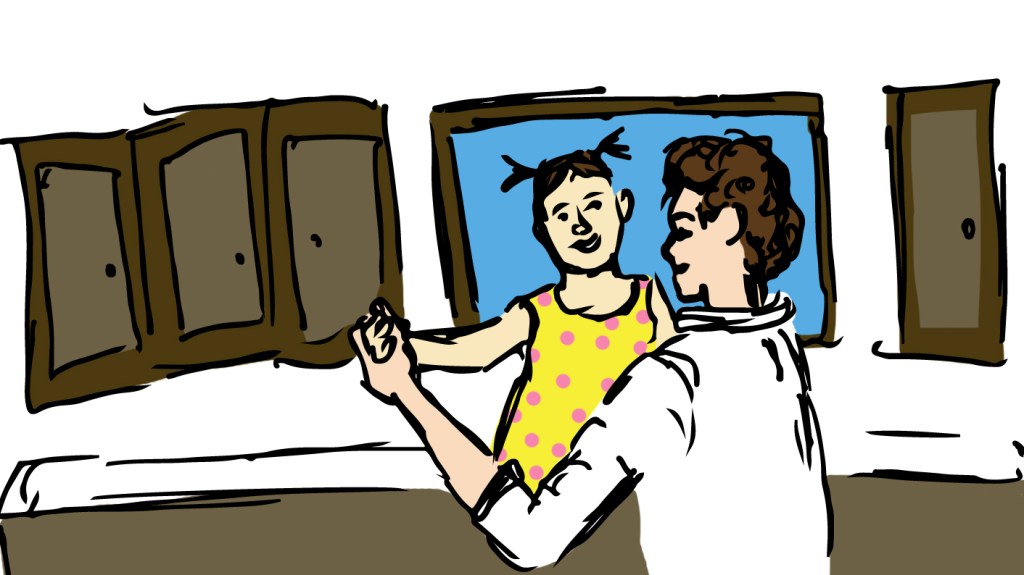
Picture this: It’s a Tuesday evening, 7:00. You’ve had a long day: writing and teaching and coaching and tutoring. You know it’s time to wear your most important hat—Dada—but you lack the energy you know you’ll need to entertain your daughter. She’s almost 19 months old and a bundle of curiosity and movement and big feelings.
You drop your shoes in the garage and walk through the door, into the kitchen, where your wife is simmering a delicious, fragrant combination of sweet potatoes, black beans, and spices. There’s Disney music playing from the robot with a human name sitting on the counter. Your daughter is performing one of her favorite activities: removing every piece of Tupperware from the cabinet and placing it on the floor. You greet her. She smiles and says, “Dada!”
You feel better already.
A few minutes pass and the song “Dos Oruguitas” from the movie Encanto comes on. This is one of your favorites, the type of longing song that makes you just a little bit sad. It’s about two caterpillars in love who become butterflies and have to leave each other, full of symbolism and beauty and sadness.
You scoop up your daughter to dance.
At first, like she is most times, she’s resistant, trying to wiggle free and get back down to her Tupperware. When she was little she would rest her head in the nook between your neck and shoulder, but that rarely happens now. You miss those days.
But then you sway her dramatically, high into the air. A smile immediately grows on her round face. You sway her some more. She starts giggling.
You listen to the hypnotic rhythm of the guitar and Spanish lyrics:
Dos oruguitas enamoradas (Two caterpillars in love)
Pasan sus noches y madrugadas (Spend their nights and mornings)
Llenas de hambre (Full of hunger)
Siguen andando y navegando un mundo (They continue navigating a world)
Que cambia y sigue cambiando (That keeps changing and changing)
Navegando un mundo (Navigating a world)
Que cambia y sigue cambiando (That keeps changing and changing)
Holding your daughter in your arms, swinging her from side to side, you think about the past 18 months. You think about the moment she entered the world and changed yours forever. You think about the sleepless nights and the crying and the utter dependence she had on you and your wife. You think about her struggles feeding and their endless complications. You think about the first year of her life featuring a rotating cast of Greek symbols-turned public-health crises and the constant buzz of worry anytime you left the house with her. You think about the good times and bad and everything in between.
You think, And we continue navigating a world that keeps changing and changing…
Dos oruguitas paran el viento (Two caterpillars stop the wind)
Mientras se abrazan con sentimiento (While they embrace with feeling)
Siguen creciendo, no saben cuándo (They keep growing, they don’t know when)
Buscar algún rincón (To look for some shelter)
El tiempo sigue cambiando (Times keep changing)
Inseparables son (They are inseparable)
El tiempo sigue cambiando (Times keep changing)
She’s loving the dancing now: swaying up to the left, up to the right, softer now, and less dramatic, following the cadence of the song. She’s smiling. You’re smiling. The sun is going down outside, it’s getting cold out there, and the kitchen is thick with the smells of a warm dinner. You think, We are inseparable…
Her smile widens as the chorus begins.
Ay, oruguitas, no se aguanten más (Ay, little caterpillars, don’t hold on too tight)
Hay que crecer aparte y volver (You must grow apart and come back)
Hacia adelante seguirás (You will carry on, forward)
Vienen milagros, vienen crisálidas (Miracles are coming, chrysalises are coming)
Hay que partir y construir su propio futuro (You must leave and build your own future)
You don’t listen to the song’s mandates: You hold your daughter even tighter. You don’t want to think about the simple, inevitable truth that all parents must confront: Your child grows up and there is nothing you can do to stop it. You don’t want to think about the next stages of her life, when she’ll no longer be the only child and then go to daycare and then preschool and then regular school and then…?
No, you think, let’s stay here in this kitchen, dancing forever.
You continue to bounce your daughter in your arms as the next verse of the song—about breaking down walls, about new dreams, about miracles—comes and goes. And then, as the final chorus begins, you begin to float, like a butterfly, right there in the kitchen, and all of your worries, all of your fears, all of your strivings and goals and responsibilities, all of it melts away and it’s just you and your daughter, flying together through the kitchen…
Ay, mariposas, no se aguanten más (Ay, butterflies, don’t hold on too tight)
Hay que crecer aparte y volver (You must grow apart and return)
Hacia adelante seguirás (You will carry on, forward)
Ya son milagros, rompiendo crisálidas (There are already miracles, chrysalises breaking open)
Hay que volar, hay que encontrar (You must fly, you must find)
Su propio futuro (Your own future)
Picture this: It’s a Tuesday evening, 7:05, and as these words drift throughout your kitchen, your daughter rests her head in the nook between your neck and shoulder. Just like she used to.
You must fly, you must find
Your own future
You hold her tight.
Join our mailing list!
Subscribe to the Essays of Dad newsletter, a weekly email with parenting stories, background on essays, book recommendations, and more.
 Essays of Dad